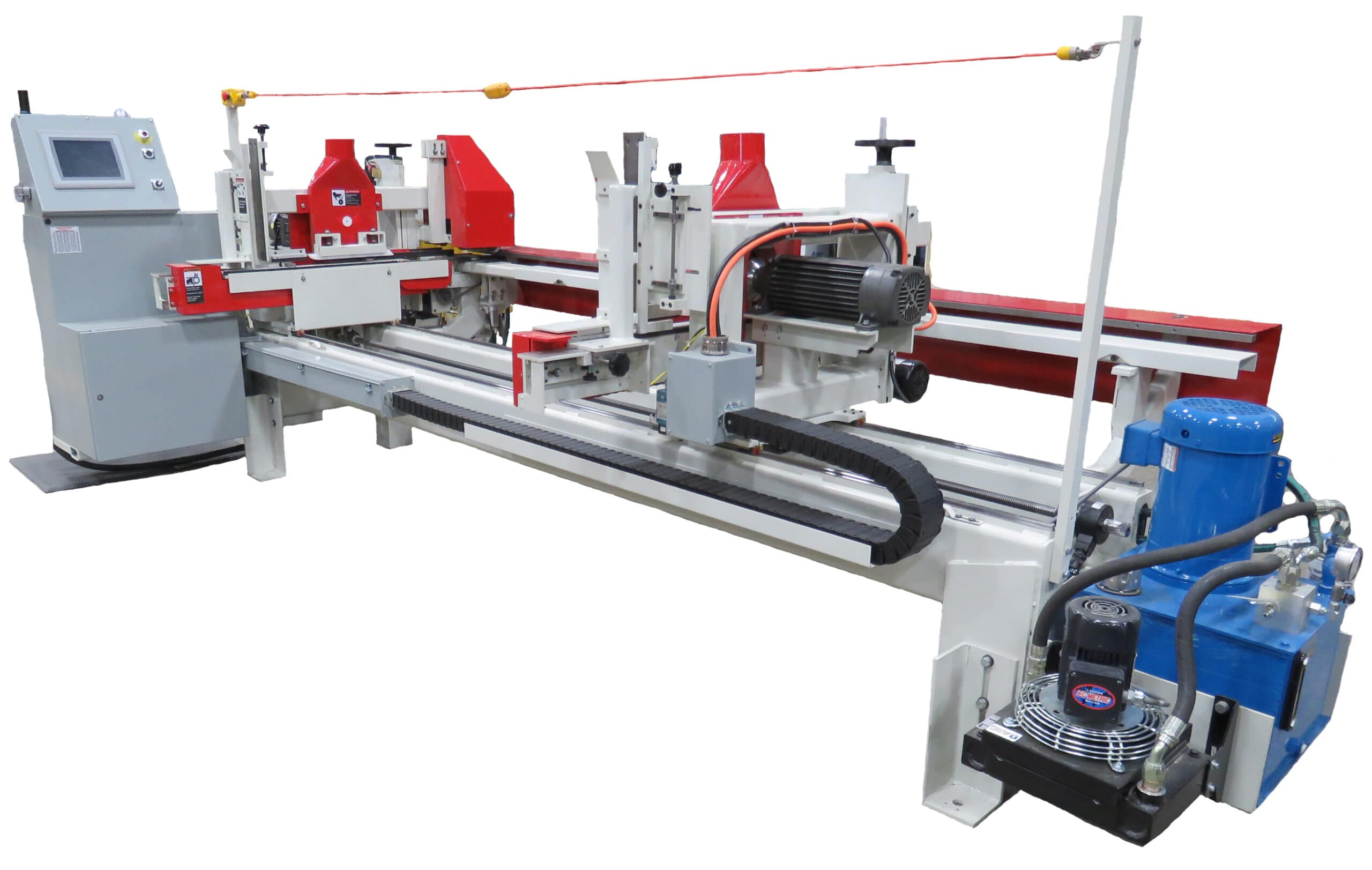
110 Equalizer
The Model 110 Equalizer can be integrated with most moulders, creating a highly efficient…
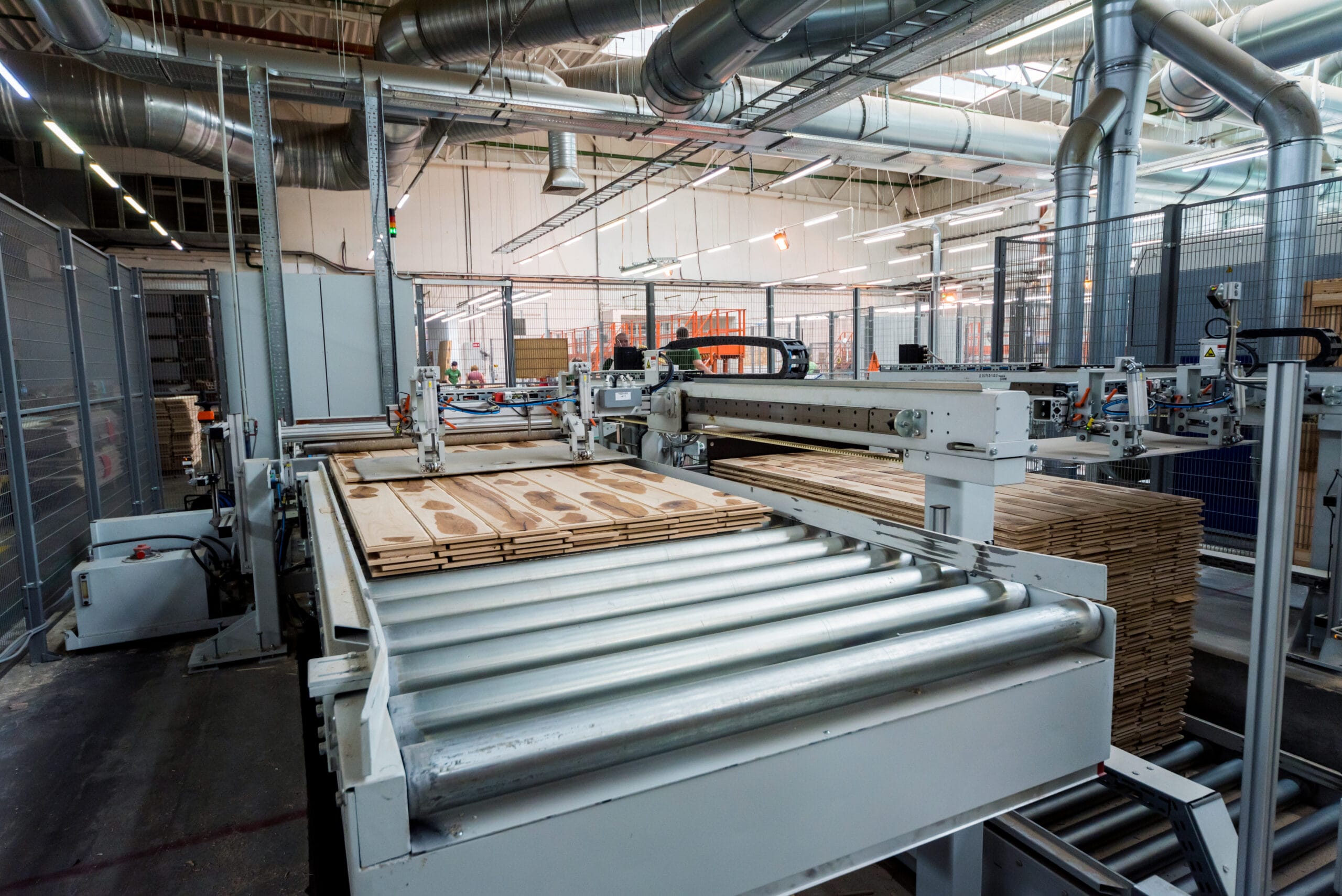
Wood window manufacturing is a precision discipline. Sills, jambs, rails, sashes, and muntins must meet tight dimensional tolerances — not because the specification sheet demands it, but because a misfit tenon joint on a window frame creates structural failures and sealing failures that reach the end customer. There is no cosmetic fix for a window that does not close square.
Mereen-Johnson’s window fabrication machinery is engineered around this core requirement: joint precision that holds through multi-shift, severe-duty production. Our heavy-frame linear rail tenoner construction is the primary differentiator versus lighter feed-through competitive machines — and it is the reason wood window manufacturers rely on Mereen-Johnson woodworking machinery for window components across both standard and custom product lines.
Machines
Mereen-Johnson’s window machine portfolio covers frame joint production, component blank ripping, engineered substrate sizing, and glue-line-quality ripping for laminated assemblies — the complete range of woodworking machinery for window components required in a modern wood window production facility.
The Model 110 Equalizer can be integrated with most moulders, creating a highly efficient…
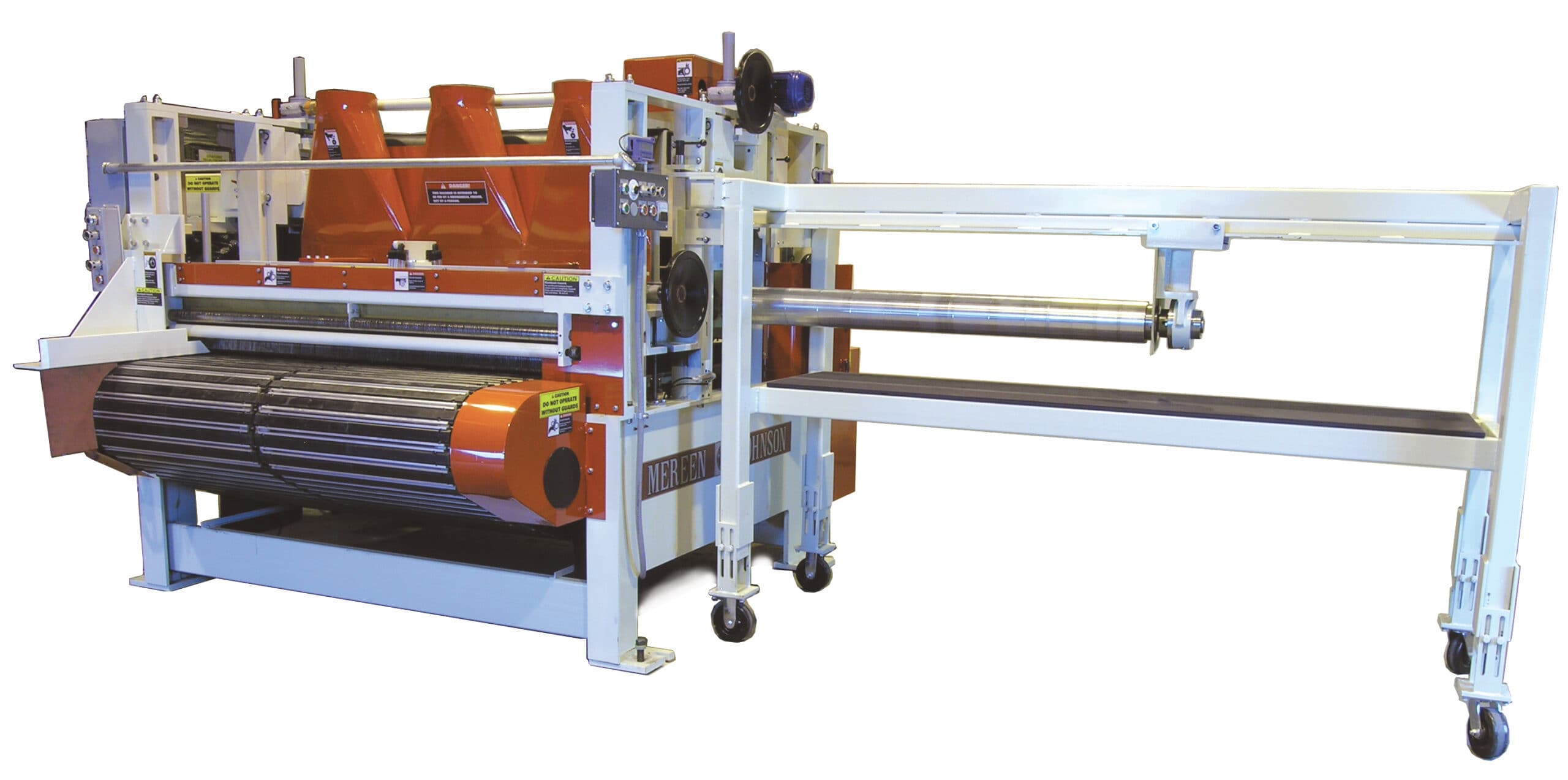
Model 435 Series is a versatile line of machinery custom designed and manufactured for nea…
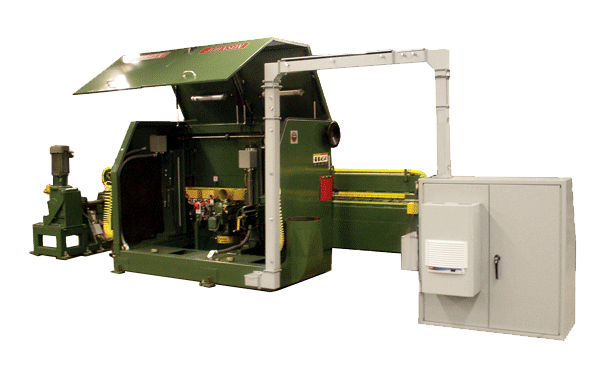
The Mereen-Johnson Single End Tenoner is a panel raising machine and cabinet door profilin…
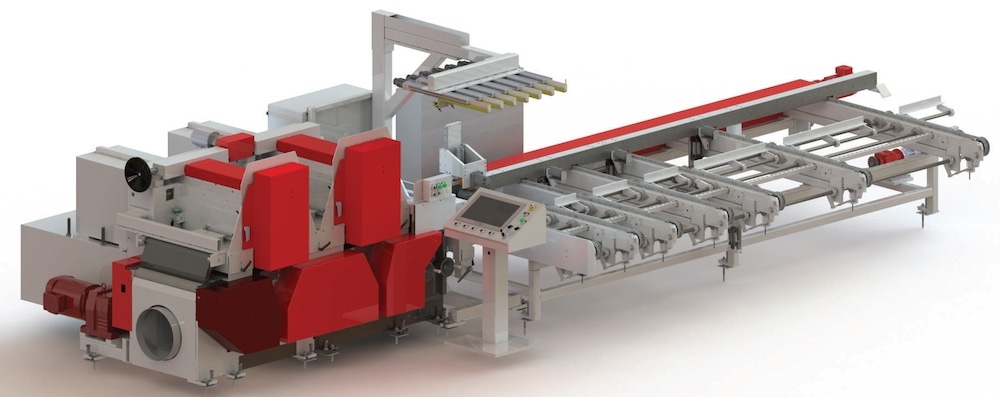
The Mereen-Johnson Roll Feed Rip Saw is a high-speed, shifting blade rip saw built to virt…
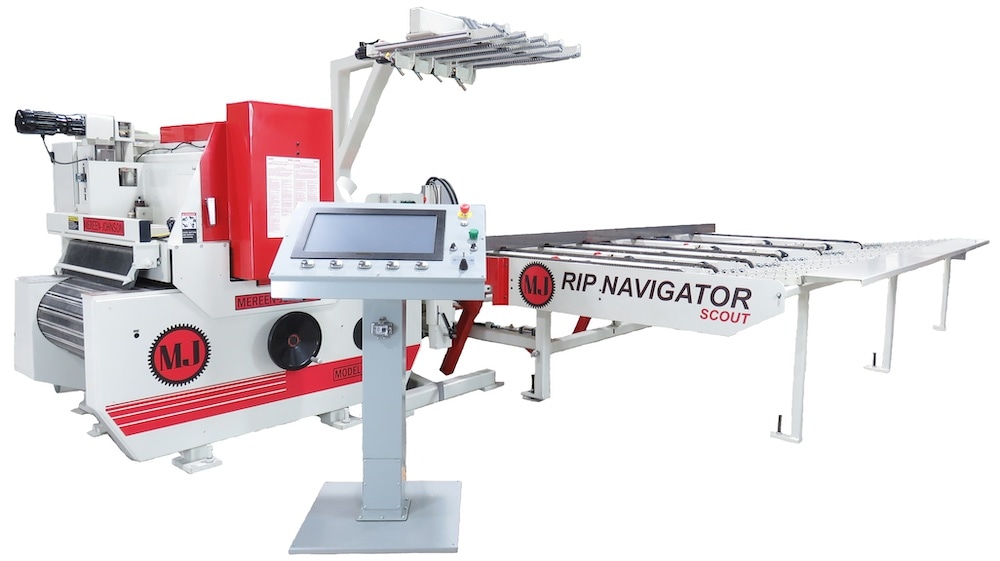
The Rip Navigator Scout is Mereen-Johnson’s largest rip optimization system — a complete,…
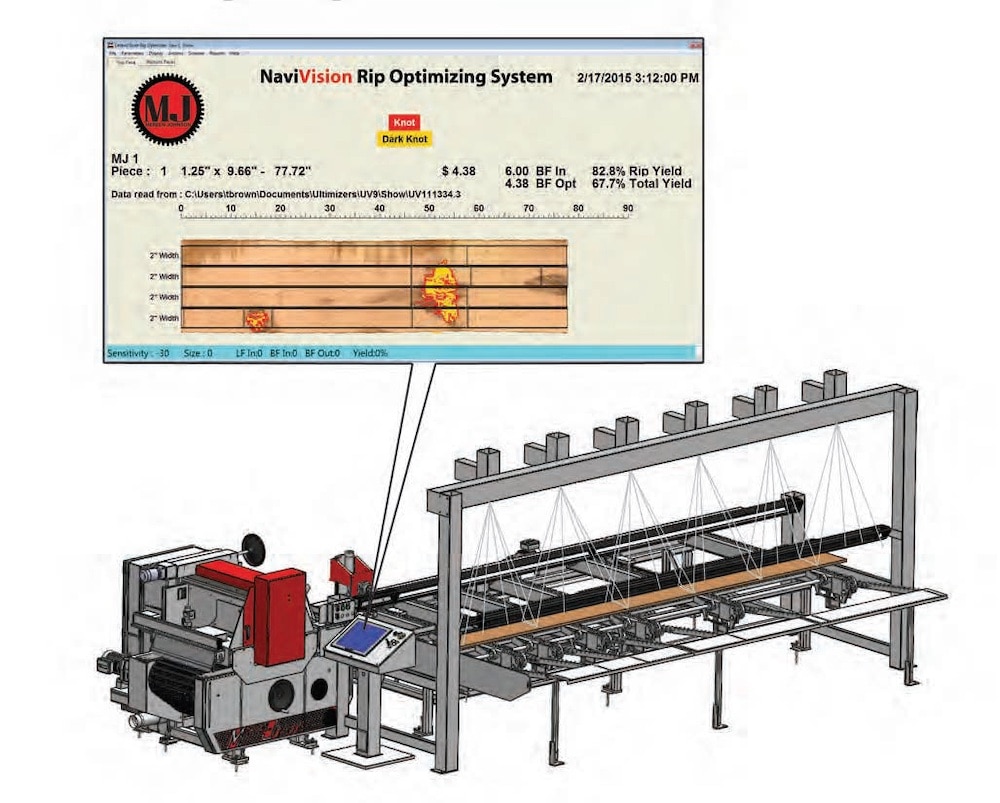
The NaviVision System is a color-camera lumber scanning system that brings automated wood…
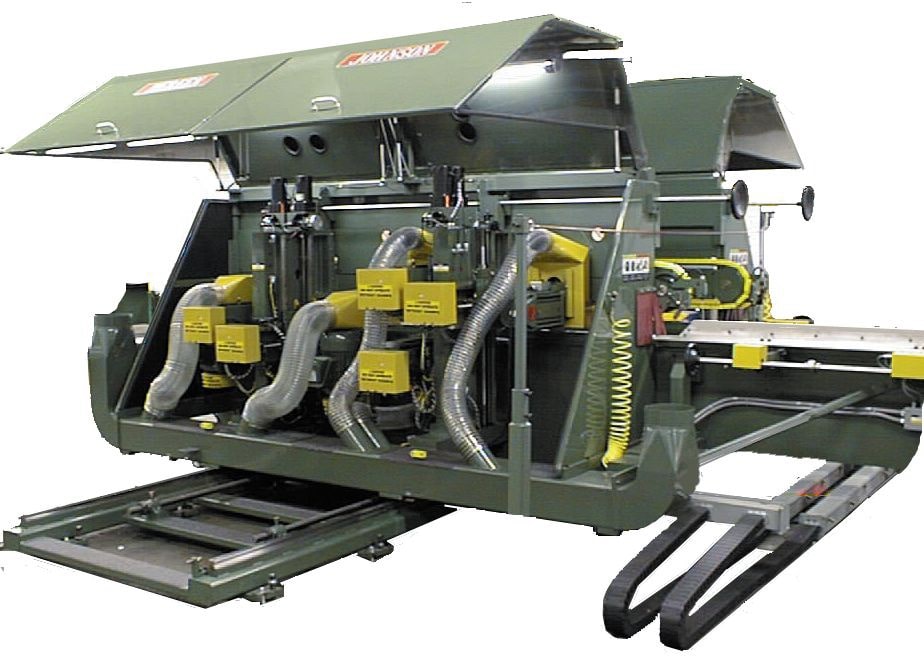
The Mereen-Johnson Double End Tenoner is a two sided tenoning machine that machines both e…
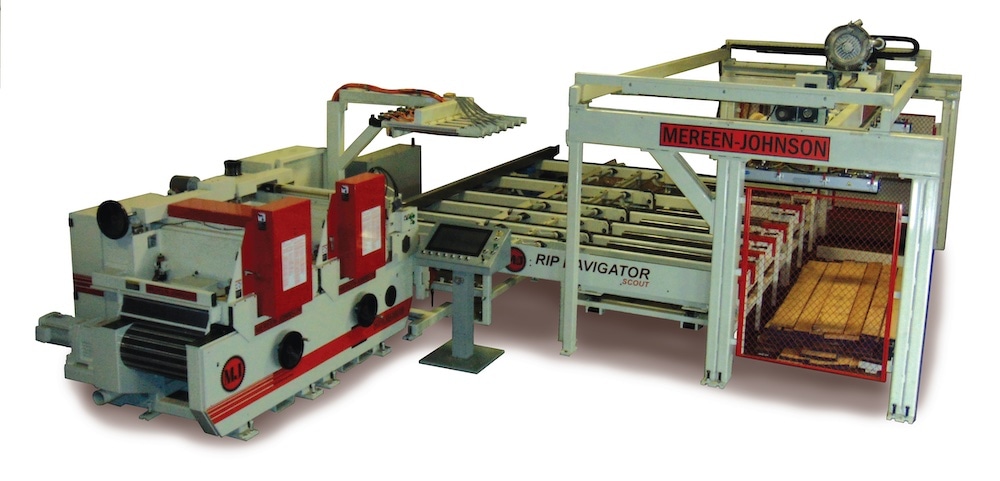
Mereen-Johnson manufacturers a complete line of gang rip saw infeed systems from manual to…
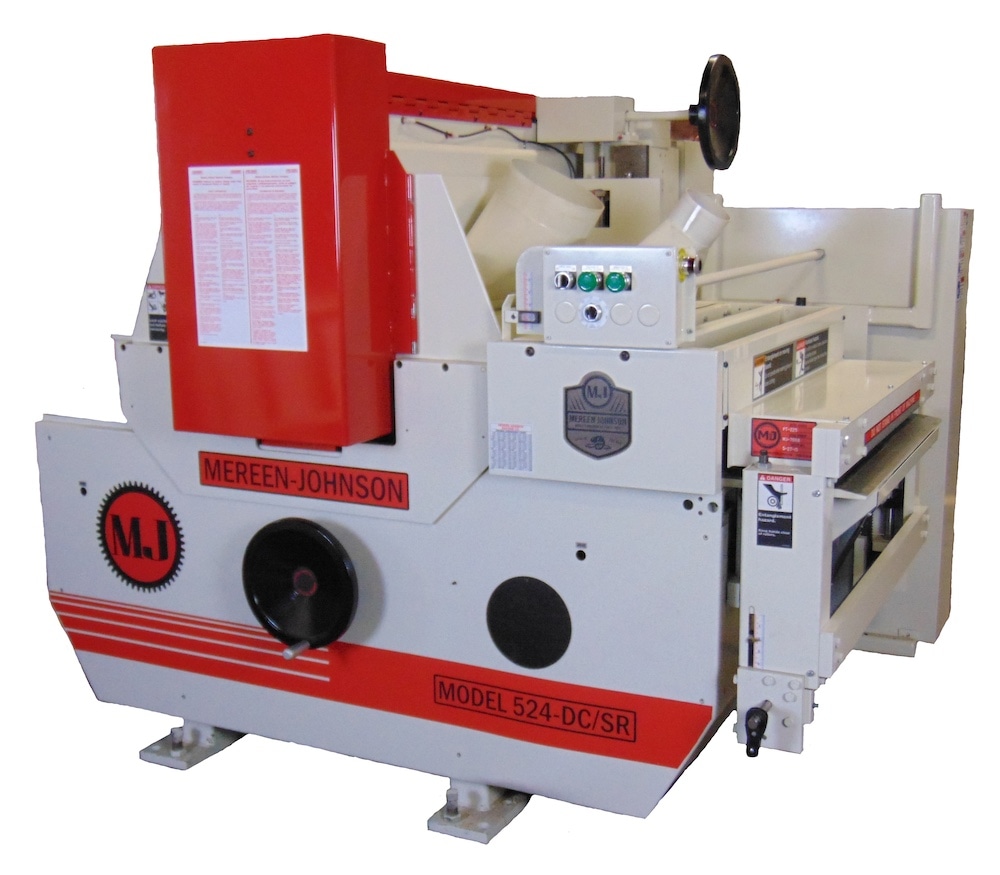
With up to four moving saw blades, Select-Ripping has never been more affordable. Our 500…
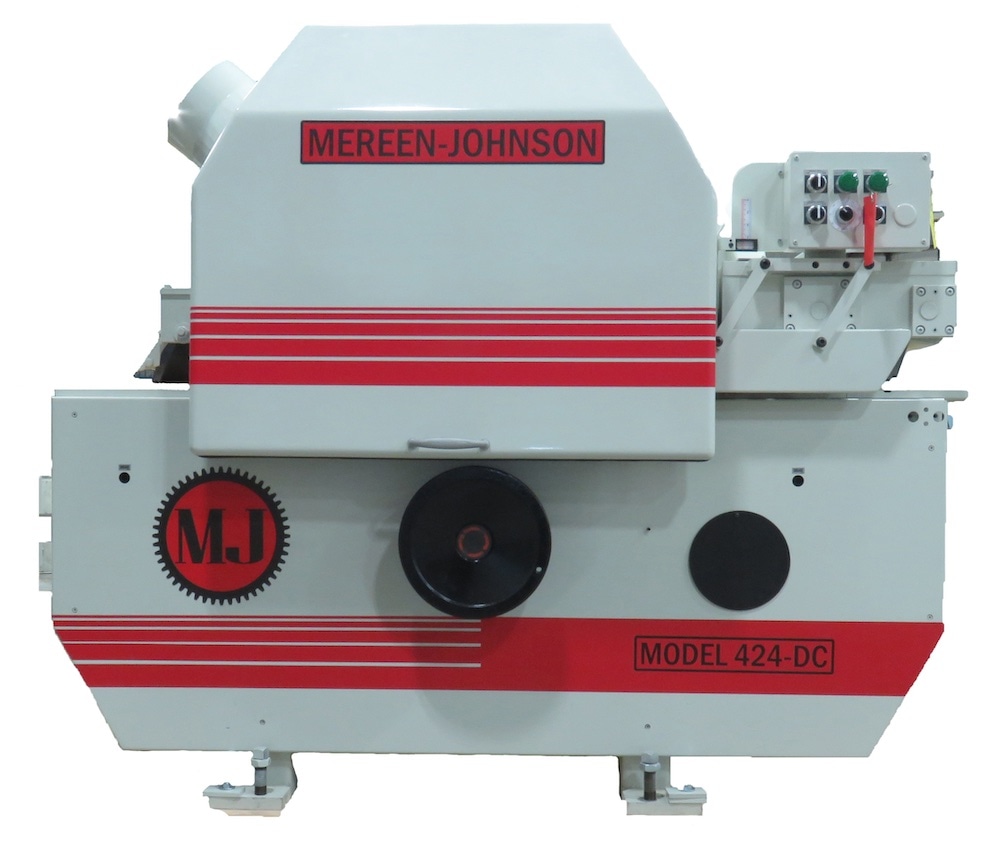
The Mereen-Johnson 400 Series is a fixed arbor rip saw line built for straight-line gang r…
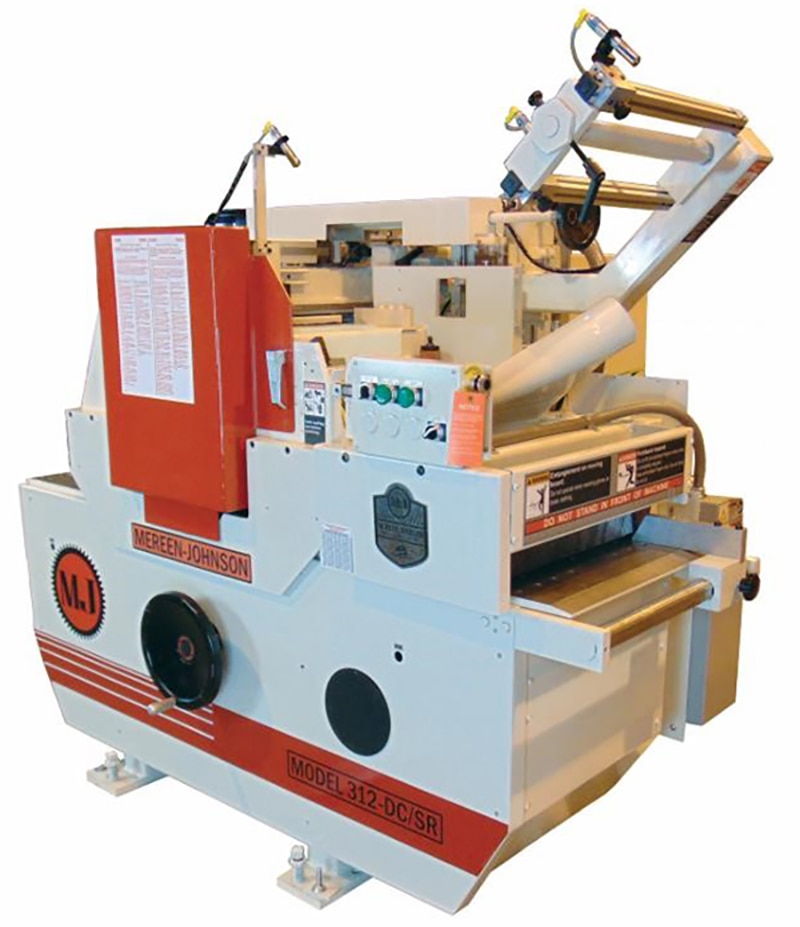
The Mereen-Johnson 300 Series rip saws offer all the quality, heavy-duty construction, and…
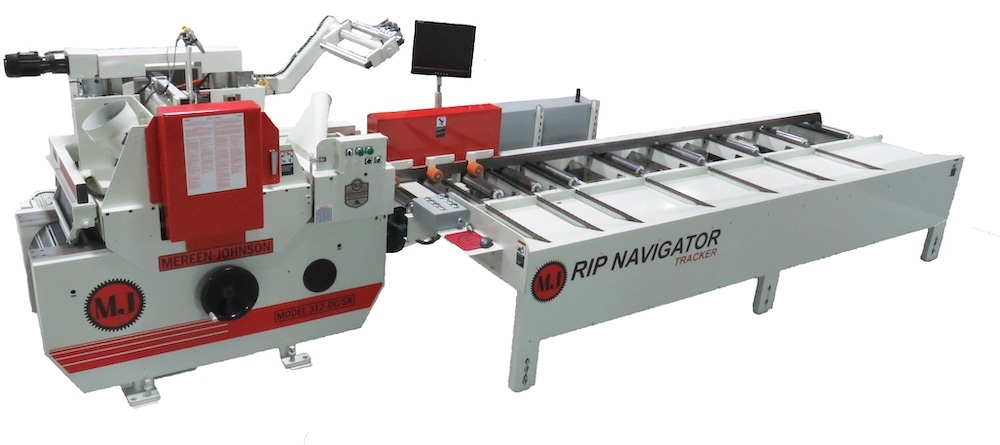
The Rip Navigator Tracker is a compact rip optimizer that brings automated Select-Rip yiel…
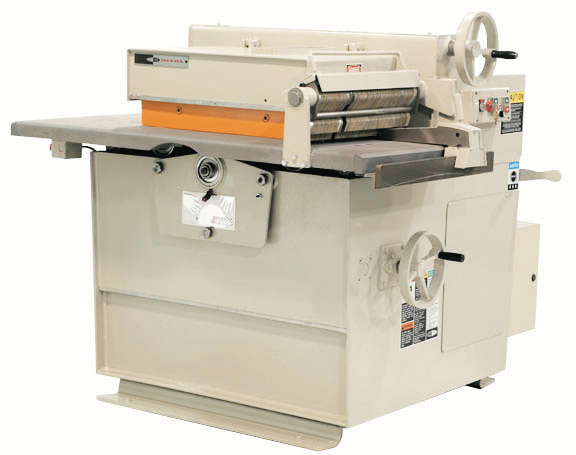
The Diehl MR-90 is an undercutting gang rip saw built to rip short stock that dip-chain sa…
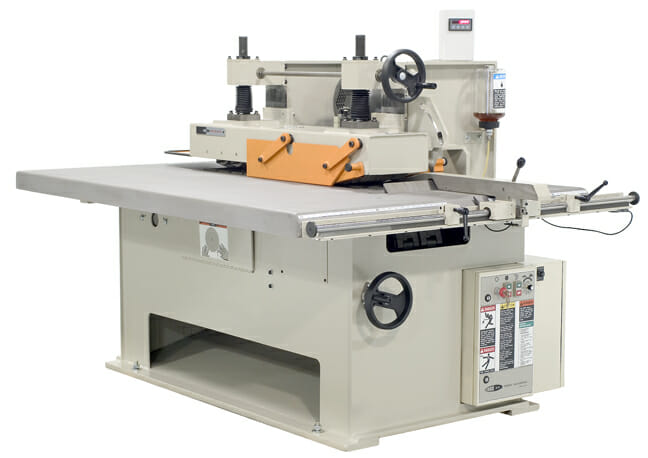
The Diehl SL-65 is a full sized rip saw built for one job done perfectly: a dead-straight,…
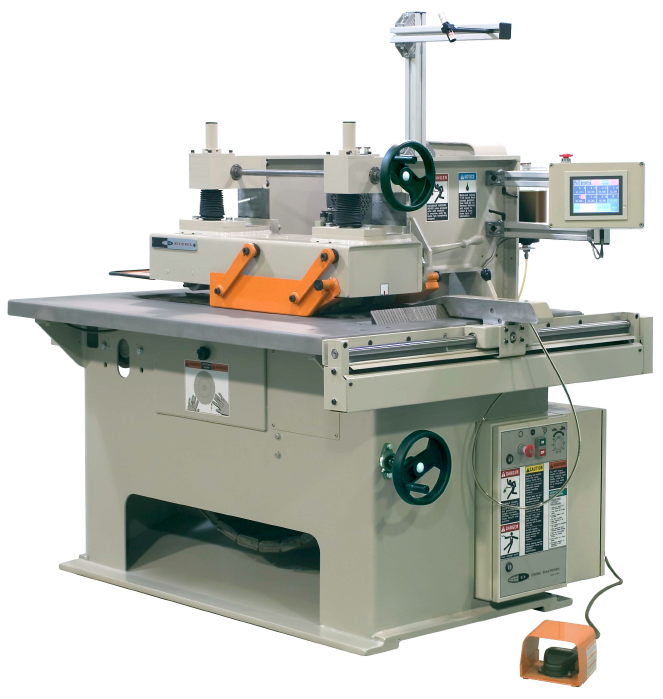
The Diehl Machines SL-35 is are our mid-sized Rip Saw, an economically priced machine with…
Automation & Robotics
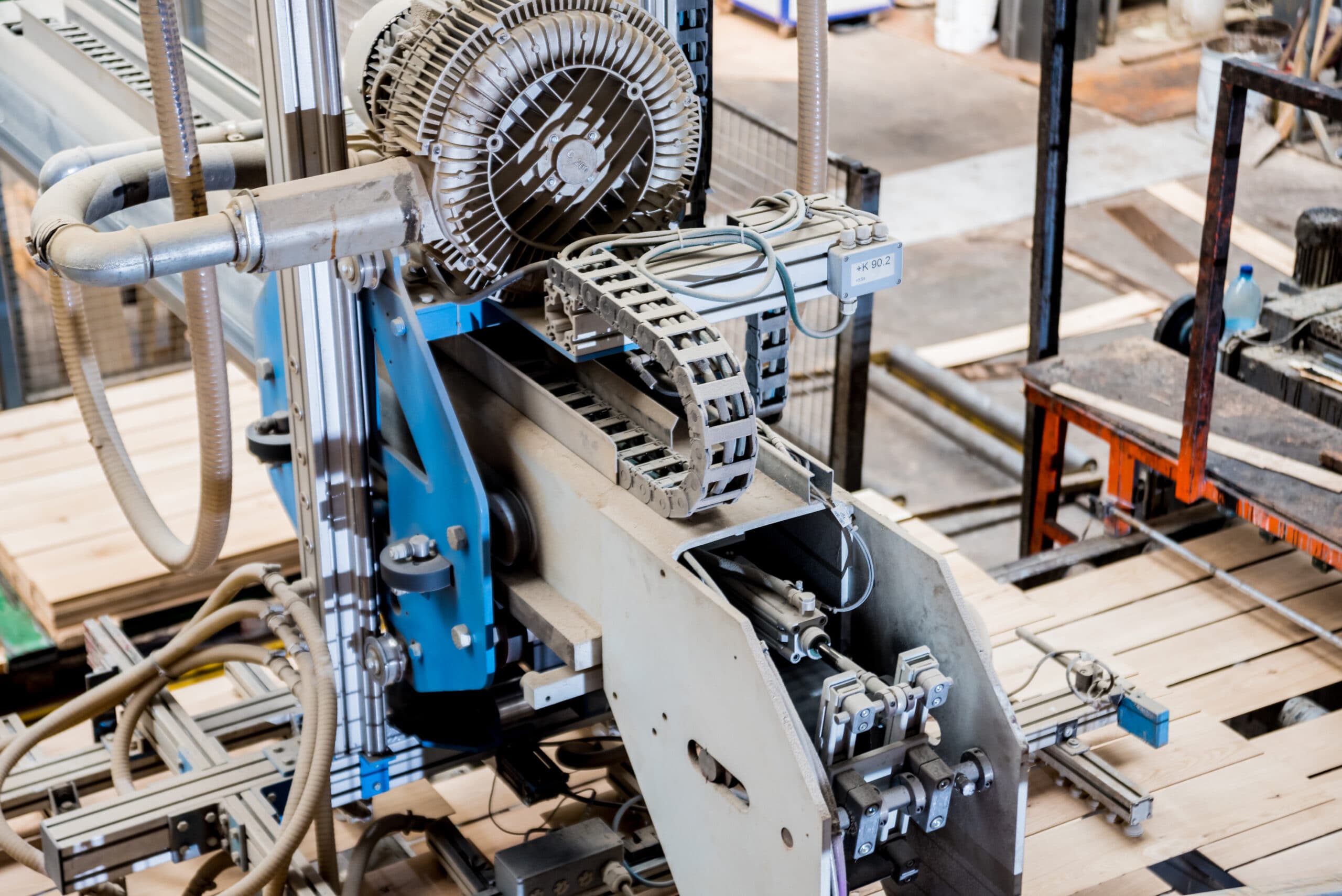
Mereen-Johnson stands at the forefront of delivering cutting-edge automated handling solutions that will streamline your workforce and wood machinery assets. Our smart, automated handling solutions are meticulously crafted to enhance your machine throughput and efficacy while substantially trimming your labor expenses.
Our complete spectrum of services ranges from conceptualization and design of production lines to installation, personnel training and ongoing maintenance, and we cater to a wide array of client requirements, offering both standardized system solutions and fully personalized options to suit your specific needs.
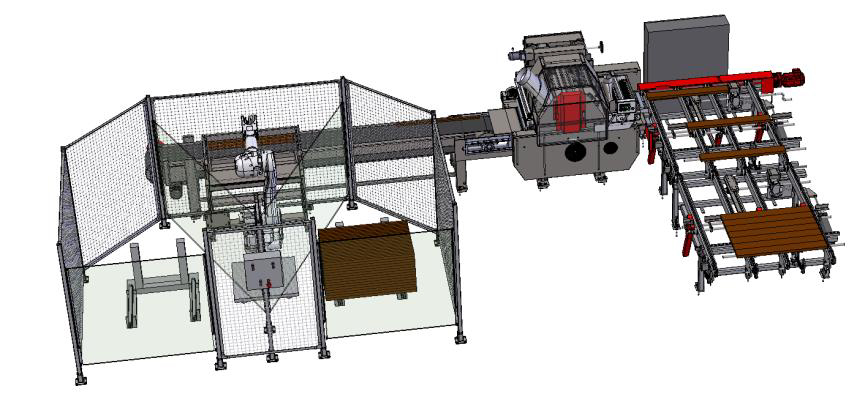
The Mereen-Johnson Double End Tenoner is the workhorse of wood window frame fabrication. Its multi-station design executes trim, profile, cope, and sanding operations on window frame components in a single pass — eliminating the multi-machine, multi-handling workflow that drives throughput bottlenecks in window fabrication lines.
HSK and stacked tooling options allow rapid profile changes across window product lines. CNC contouring capability enables complex cross-sectional profile shapes without custom retooling for every new profile specification. High-tolerance construction maintains joint precision through the sustained production loads that window fabrication demands.
Joint precision, profile complexity, and throughput efficiency are the three engineering imperatives in wood window manufacturing. Mereen-Johnson’s window fabrication equipment is built to address all three — without requiring a compromise between any of them.
| Pain Point | Mereen-Johnson Solution |
| Tenon joint misfit causing structural and sealing failures | Heavy-frame linear rail Double End Tenoner construction maintains joint precision through multi-shift severe-duty production — greater accuracy than lighter feed-through competitive machines |
| Complex profile requirements demanding frequent retooling | HSK and stacked tooling options on the Double End Tenoner enable rapid profile changes across window product lines without extended downtime |
| Multi-step frame fabrication bottlenecking throughput | Double End Tenoner multi-station design processes window frames in a single pass: trim, profile, cope, and sand — collapsing multiple operations into one |
| Edge quality inconsistency in laminated window components | Diehl Machines straight-line rip saws deliver glue-line-quality edges for window components requiring lamination or structural edge bonding |
| Mixed material production: solid wood and engineered substrates | Mereen-Johnson window fabrication equipment supports both solid wood and composite or engineered wood window components on the same machine platforms |
| Small-batch custom window orders disrupting production flow | Single End Tenoner with 50° miter fixture handles specialty and custom window geometries without dedicated custom tooling investment |
The Mereen-Johnson Double End Tenoner is designed from the frame up for the dimensional demands of window fabrication. The engineering differentiators that matter most to window manufacturers:
For window fabrication operations running multiple frame profiles across standard, custom, and architectural product lines, the Double End Tenoner’s HSK tooling and CNC contouring capability directly determine changeover speed and product line flexibility.
Consistent frame fabrication begins with accurately dimensioned blanks. Mereen-Johnson’s rip saw and sizing equipment ensures that jamb stock, rail stock, sill stock, and sash blanks arrive at the tenoner at the correct width and edge quality — eliminating upstream dimensional variation as a source of downstream joint failures.
The same vertical integration that governs Mereen-Johnson’s tenoner engineering applies to the rip saw and sizing portfolio: every machine is designed, fabricated, assembled, and tested in-house, and every machine in the window component production chain can be sourced from a single engineering partner.
Modern wood window manufacturing increasingly blends solid wood and engineered wood substrates — solid wood for exposed interior components, LVL or composite cores for structural stability, laminated assemblies for clad window products. Mereen-Johnson window fabrication equipment is engineered to handle both material types on the same machine platforms.
The Double End Tenoner’s tooling flexibility and feed system design accommodates the density variation between solid lumber and engineered substrates. The 435 Series sizing machinery handles LVL and plywood alongside solid wood panel components. Diehl straight-line saws deliver glue-line quality on both solid and laminated stock. Window manufacturers running mixed-material product lines do not need separate machine lines for each substrate type.
Contact the Mereen-Johnson engineering team to discuss your window frame profiles, component tolerances, production volumes, and material mix. We will specify the right window fabrication equipment configuration — standard or custom — for your operation.
Window frame joint tolerances are structurally and functionally critical — a misfit tenon joint creates both a structural weakness and a sealing failure that the installer cannot correct in the field. Heavy-frame linear rail construction maintains the dimensional alignment of the tenoner’s cutting stations under the sustained cutting forces of multi-shift production. Lighter feed-through machines deflect progressively under production loads, causing joint dimension drift that is often undetected until field failures emerge. Mereen-Johnson’s linear rail construction eliminates this drift, maintaining joint precision throughout the machine’s working life.
The Mereen-Johnson Double End Tenoner processes window frame components through trim, profile, cope, and sanding operations in a single machine pass. Trim stations square the component ends to precise length. Profile stations cut the frame cross-section geometry. Cope stations create the mating profile for corner joints. Sanding heads deliver surface finish on the profiled faces in-line. Collapsing these four operations into a single pass eliminates the inter-station handling, alignment errors, and throughput gaps that a multi-machine approach introduces.
The HSK tooling system on the Mereen-Johnson Double End Tenoner is engineered for rapid, repeatable tool changes. HSK interface geometry provides automatic centering and clamping — tooling is seated and clamped in a single motion without manual alignment. Combined with the stacked tooling options that allow multiple profile operations at a single station, the total changeover time between window profile specifications is significantly reduced compared to conventional tenoner tooling systems. Actual changeover time depends on the number of stations and the degree of profile change between runs.
Yes. Mereen-Johnson window fabrication machinery is engineered to handle both solid wood and engineered wood substrates — LVL, structural plywood, and composite materials — on the same machine platforms. The Double End Tenoner’s feed system and tooling geometry accommodate the density differences between solid lumber and engineered substrates. The 435 Series sizing machines handle LVL and plywood panel components alongside solid wood. Diehl straight-line saws deliver glue-line quality on both solid and laminated stock. Window manufacturers running mixed-material product lines do not require separate machine lines for each substrate type.
The Single End Tenoner is available with miter fixture tables that accommodate cuts up to 50 degrees for complex angled window component geometries — bay window frames, trapezoid sashes, and custom architectural configurations. Servo-driven alignment pins maintain registration accuracy at miter angles where conventional fixture clamping loses precision. For specialty window operations running custom architectural geometries on smaller batches, the Single End Tenoner provides the flexibility to handle these configurations without a dedicated custom tooling investment.
The configuration starts with an application engineering review: Mereen-Johnson’s engineers review the window profile catalog, component dimensions, production volumes, and material mix to determine the required station count, tooling configuration, and feed system specifications. Multi-station configurations from 2 to 5 machine centers are available, with station assignments determined by the profile operations required for the specific window frame geometry. The goal is a configuration that processes the full profile in a single pass without over-specifying stations for operations the product line does not require.
Diehl Machines straight-line rip saws produce a glue-line-quality rip cut surface — the industry standard for edge quality in wood manufacturing. For laminated window components where edge bond quality is a structural requirement, this means the rip surface meets bond strength standards directly off the saw without secondary jointing or edge preparation. The Wise Guide automated moving fence system adjusts between programmed target dimensions automatically, eliminating manual fence repositioning between width specifications in laminated window component production.
Lead time depends on the specific machine configuration — standard catalog machines carry shorter lead times than fully custom-engineered systems. All machines are fabricated and assembled in Mereen-Johnson’s Webster, South Dakota facility, with full-scale pre-shipment testing completed before delivery. Mereen-Johnson’s team provides installation support and operator training as part of the commissioning process. Contact the engineering team for current lead time estimates on specific configurations.
Mereen-Johnson provides full lifecycle support: parts, schematics, remote monitoring via IoT connectivity, remote troubleshooting, and on-site service. Operator training is provided at commissioning and available on an ongoing basis. The Mereen-Johnson support relationship does not have a defined end date — parts availability and technical support are maintained for the working life of the machine.