Single End Tenoner vs. Double End Tenoner: Which Do You Need?

A single end tenoner machines one end of a part per cycle. It’s flexible and lower-cost, but for two-ended work every part is handled and positioned twice. A double end tenoner machines both ends at the same time on a continuous chain feed, establishing finished length and squareness in one pass. Choose single end for […]

Can End Matching and Tenoning Be Automated?

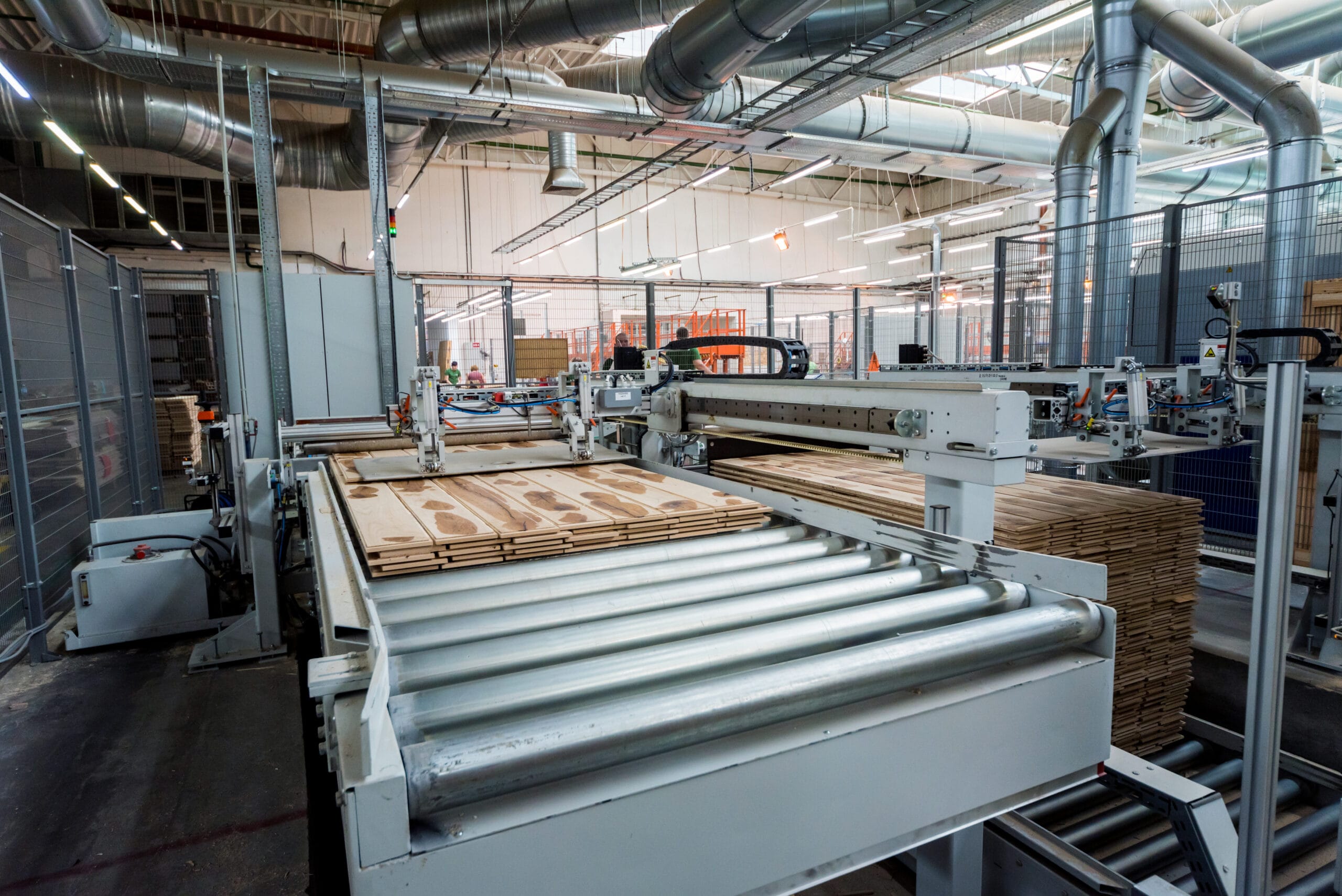
Yes. End matching and tenoning are fully automatable, and the path is a progression rather than an all-or-nothing jump. A chain-fed double end tenoner machines both ends of every part continuously as it passes through, which removes the load-cycle-flip-reload sequence of single-end work. Automated infeed, outfeed, and stacking then remove the per-piece handling. What stays […]

How Do I Increase Throughput in Flooring Production?

Flooring throughput is set by your slowest station, and that’s often the end-matcher or the material handling around it, not the moulder. You increase it by measuring true station speeds to find the real constraint, running continuous chain-fed end-matching on a double end tenoner, feeding the line consistent blanks from the rip operation, automating handling […]

Automated Box Clamps vs. Manual Assembly: Which Is Right for Your Shop?

Manual assembly relies on hand clamps and an operator’s eye for square. It’s flexible and costs nothing to start, but it takes minutes per box, depends on skill, and varies from one box to the next. A box press seats and squares every box under controlled, locked pressure in a repeatable cycle. The press wins […]

Can Cabinet Assembly Be Automated?

Yes, with a clear definition of “automated.” The repetitive, labor-intensive parts of drawer box production can be automated or machine-assisted today: joint machining on a CNC dovetailer, and positioning, clamping, and consistent joint seating on a box press. Component handling can be automated around them, up to and including robotic cells. Glue application, hardware installation, […]

How Do I Reduce Bottlenecks in Cabinet Assembly?

Cabinet assembly bottlenecks usually trace to a handful of causes: hand clamping that takes minutes per box, waiting on glue and squaring checks, poor part staging, variable joint fit, and rework from out-of-square assemblies. Fix them in order: measure where the time actually goes, stage and sequence parts to the bench, standardize the glue workflow, […]

Box Clamps: Automating Cabinet and Drawer Box Assembly

A box clamp, also called a box press or case clamp, seats and squares a cabinet or drawer box under controlled pressure in a repeatable cycle, instead of relying on hand clamps and an operator’s eye. The operator assembles the glued parts on the machine, slides the clamp into position, and actuates it; the clamp […]

How Can I Automate Defect Detection During Ripping?

You automate defect detection by adding a scanning system that inspects every board, using optical cameras, laser profiling, and in some cases a grader’s crayon marks, to locate knots, wane, splits, and shape defects. That defect map goes to the optimizer, which places the cuts around them. It replaces fatigue-prone manual grading with fast, consistent […]

Rip Optimizing Systems: How Scanning and Automation Maximize Lumber Yield

A rip optimizing system scans each board for size, shape, and defects, then a computer calculates and positions the saw blades for the cut pattern that returns the most value or volume, board by board, in milliseconds. By replacing operator guesswork with a data-driven decision on every board, it typically lifts lumber yield 3 to […]

Straight Line Rip Saw vs. Conventional Rip Saw: Which Do You Need?

A conventional rip saw references the cut off the board’s existing edge, so it depends on that edge being straight. A straight line rip saw creates its own true reference edge, handling warped and crooked stock without a separate jointing step. Conventional saws suit already-straight stock and simple width ripping. Straight-line wins on accuracy, edge […]