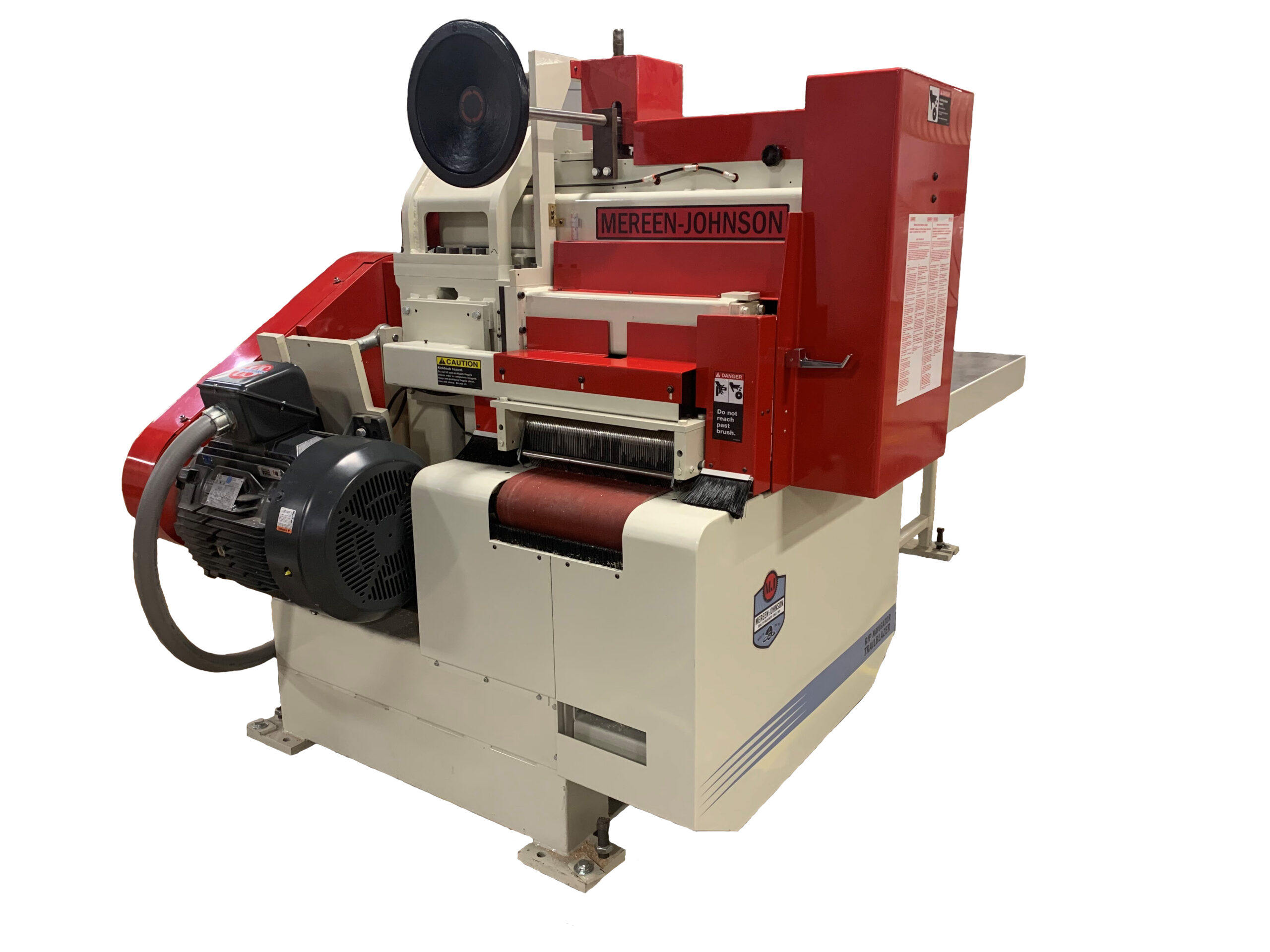
Model 5300 “Select-A-Rip”™ Rip Saw with Rip Navigator™ Trailblazer
Model 5300 “Select-A-Rip”™ Rip Sawwith Rip Navigator™ Trailblazer The 5300 with Trailblaze…
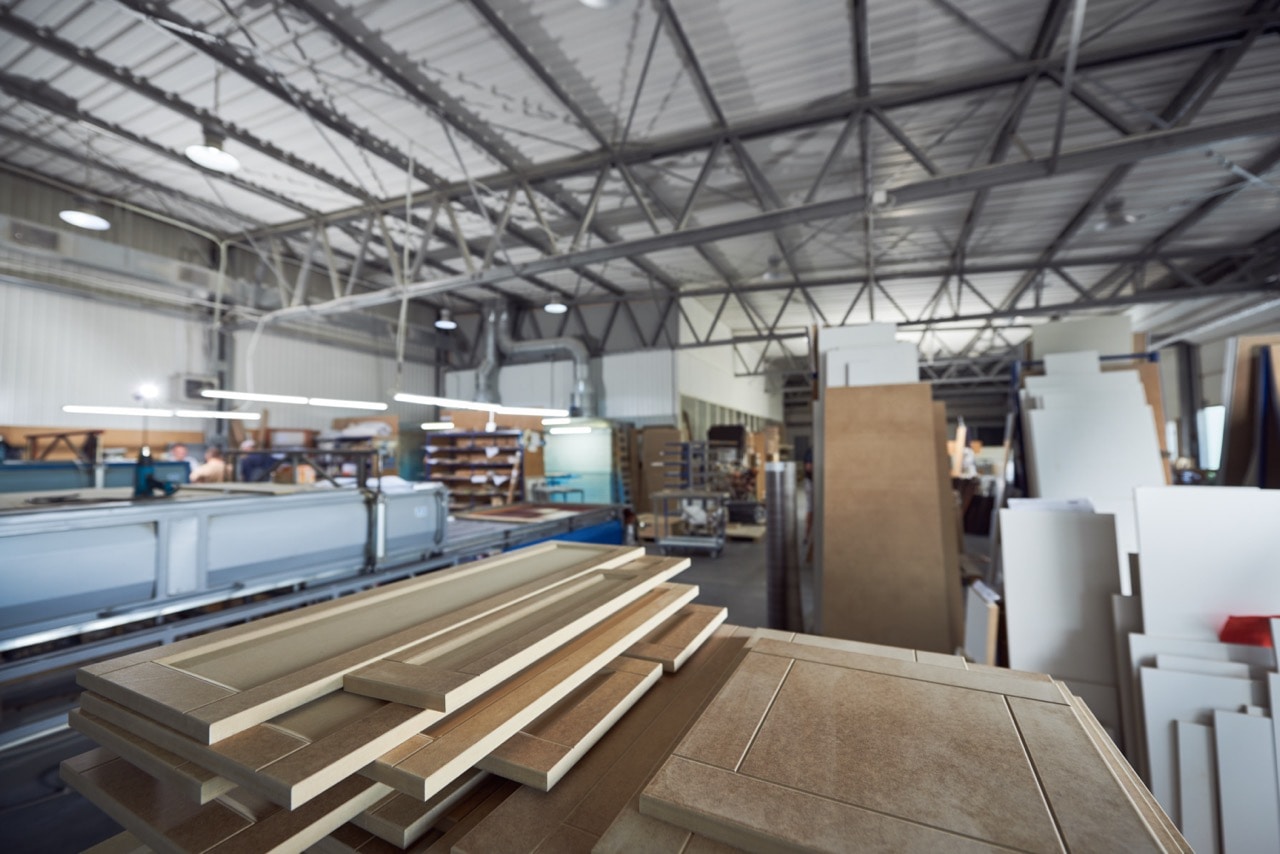
Custom millwork operations run production processes that catalog machinery was not designed to accommodate. Unique component geometries, proprietary profile specifications, non-standard material dimensions, and architectural detailing requirements combine to create production cells that off-the-shelf custom woodworking machines simply cannot serve without significant compromise.
Mereen-Johnson occupies a rare position in the wood manufacturing industry: a company with both the engineering capability to design any machine from concept and the in-house manufacturing infrastructure to build, assemble, and test it at full production scale before it ships. Whether the application requires a custom trim saw machine with a unique feed geometry, a fully automated millwork production cell with integrated robotics, or custom cutting millwork equipment engineered around a specific architectural profile catalog, Mereen-Johnson’s design-build process begins with the customer’s process — and engineers the machine around it.
Machines
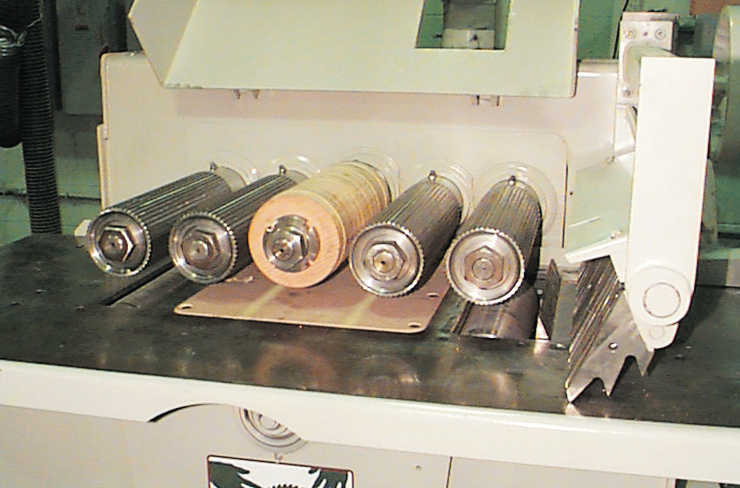
The Mereen-Johnson custom millwork machinery portfolio spans bespoke rip and sizing lines, custom-configured tenoners and profiling machines, robotic automation cells, yield optimization systems, and integrated conveying — all engineered in-house and supported by the same team that designed them.
Model 5300 “Select-A-Rip”™ Rip Sawwith Rip Navigator™ Trailblazer The 5300 with Trailblaze…
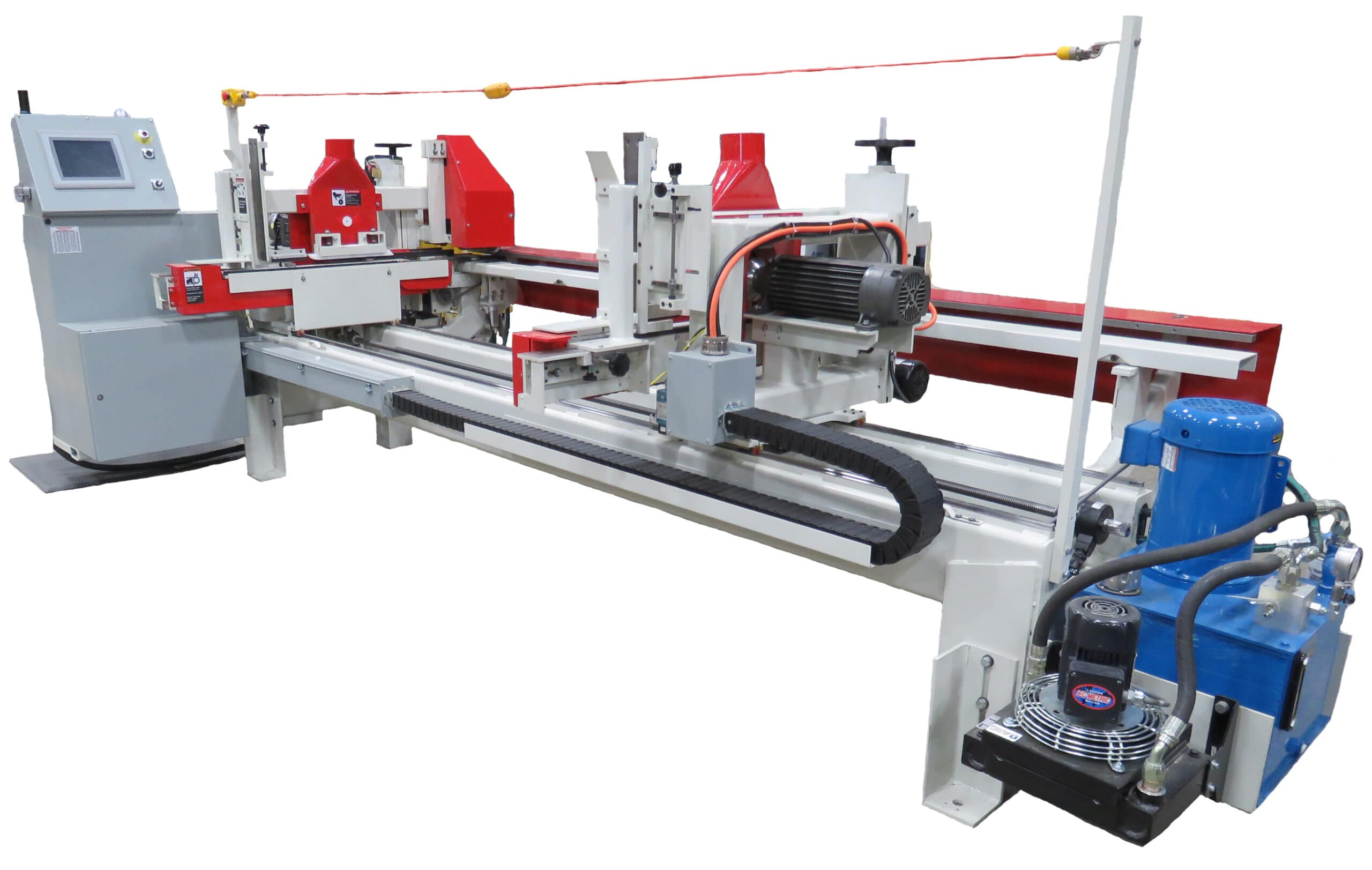
The Model 110 Equalizer can be integrated with most moulders, creating a highly efficient…
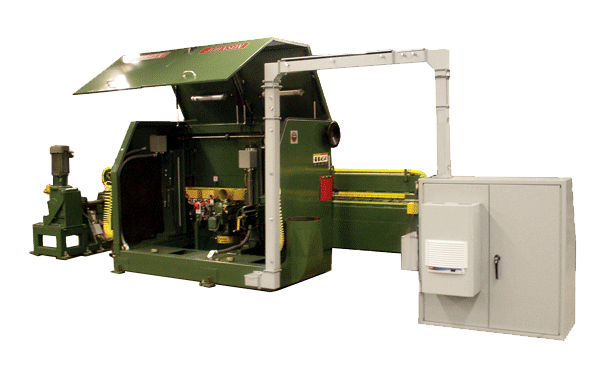
Our Tenoners are designed for high production runs while simultaneously providing the flex…
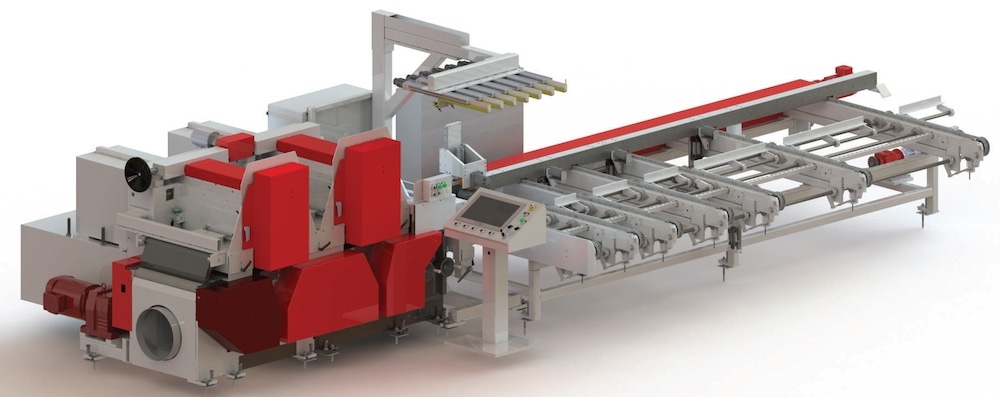
Our Roll Feed Saw’s high-speed, high-yield hogging arbor options virtually eliminates edgi…
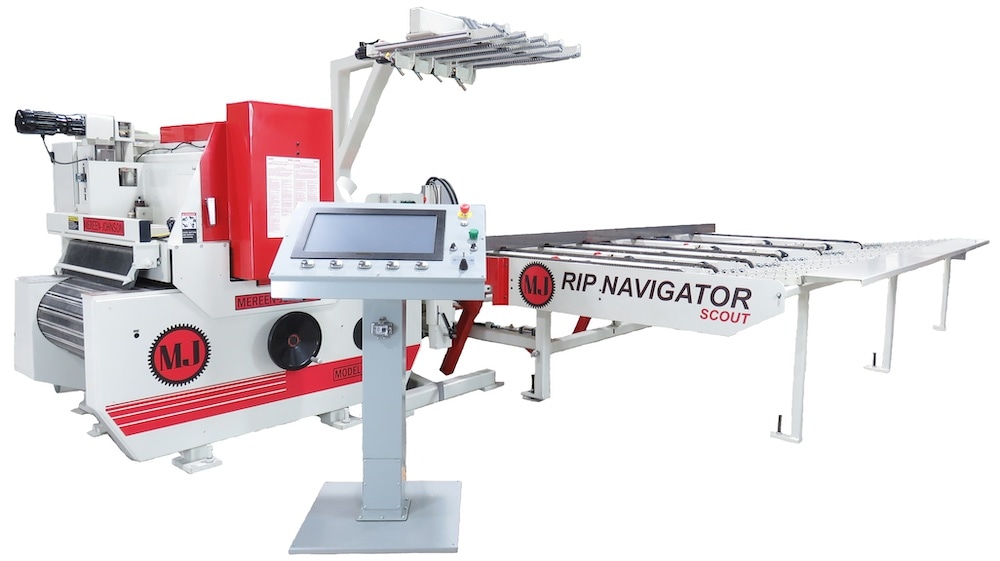
Our largest Rip Optimization system is the Scout; Equipped with infeed chains, board deale…
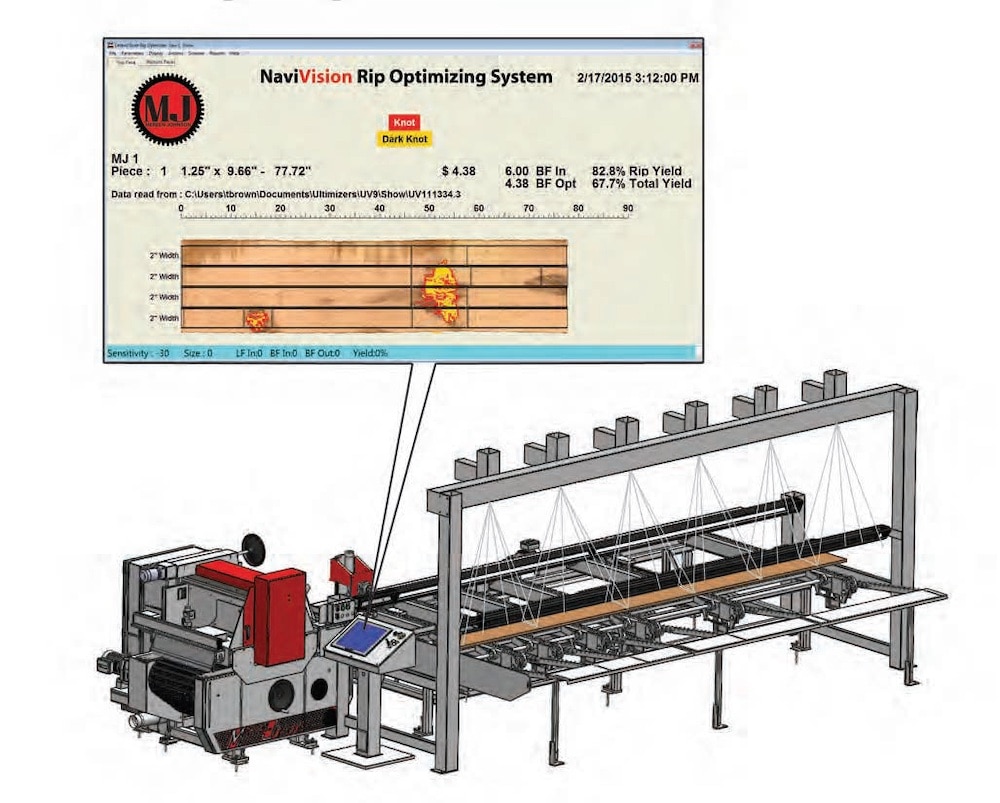
Now with NaviVision scanning, Mereen-Johnson provides multiple color cameras for single fa…
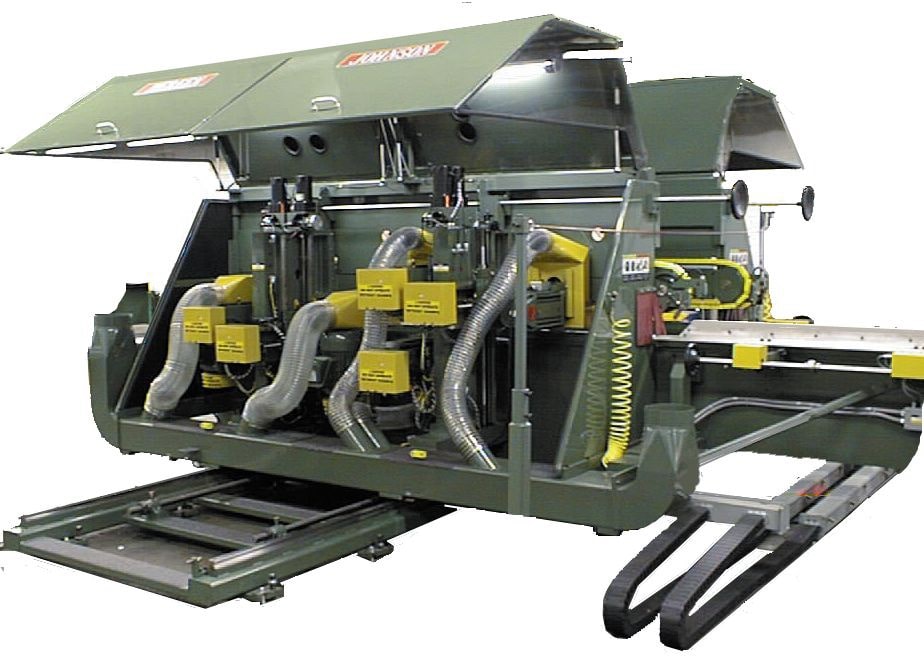
Feature the latest in technology advancements, ensuring improved consistency, accuracy, su…
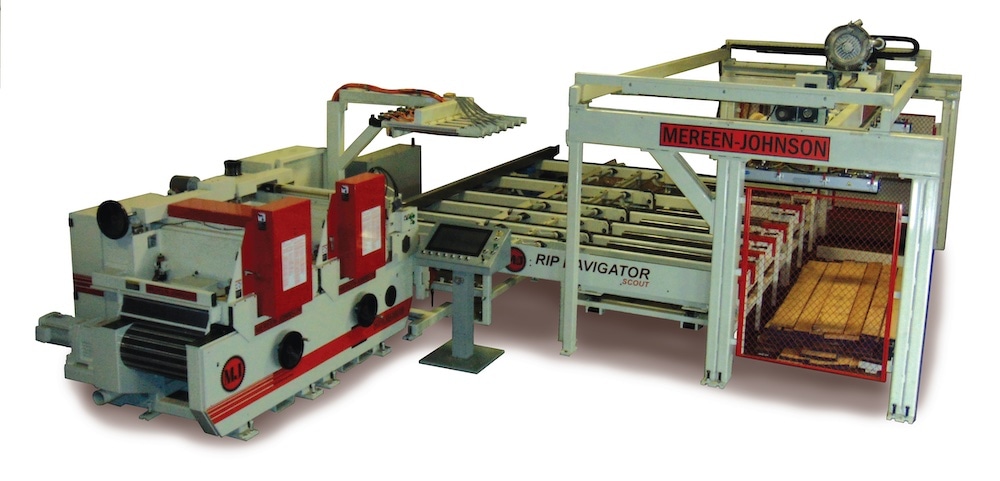
Mereen-Johnson manufacturers a complete line of gang rip saw infeed systems from manual to…
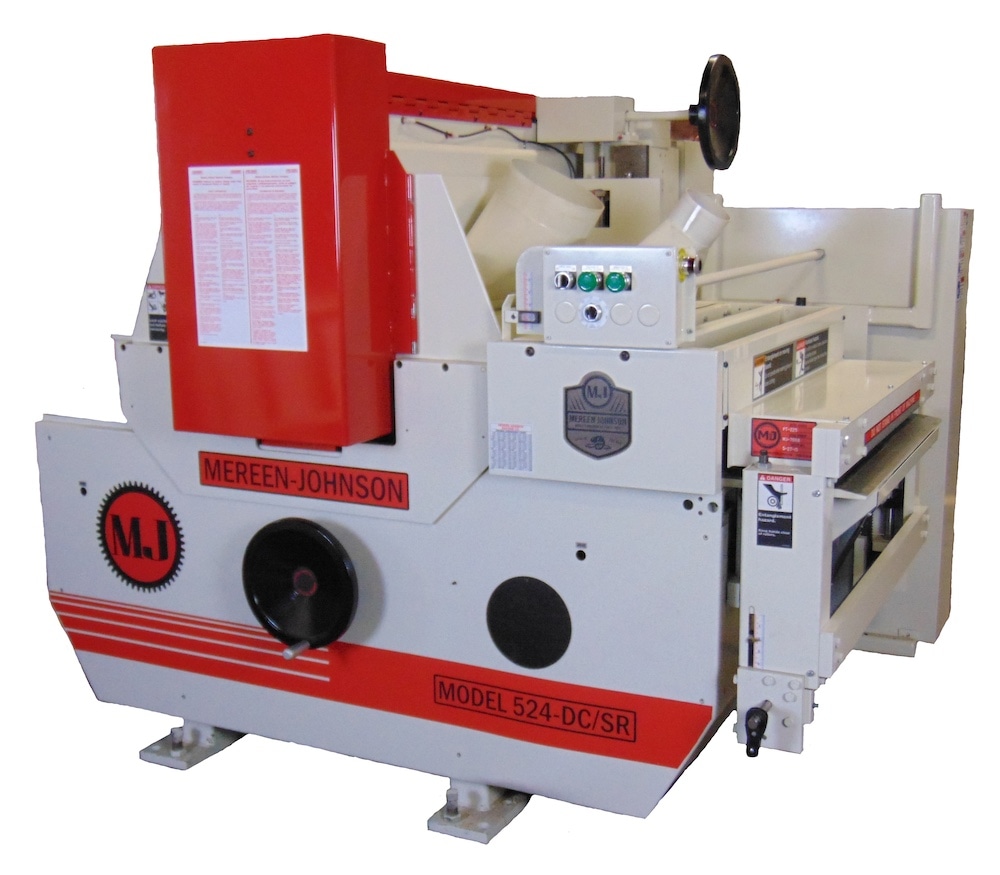
With up to four moving saw blades, Select-Ripping has never been more affordable. Our 500…
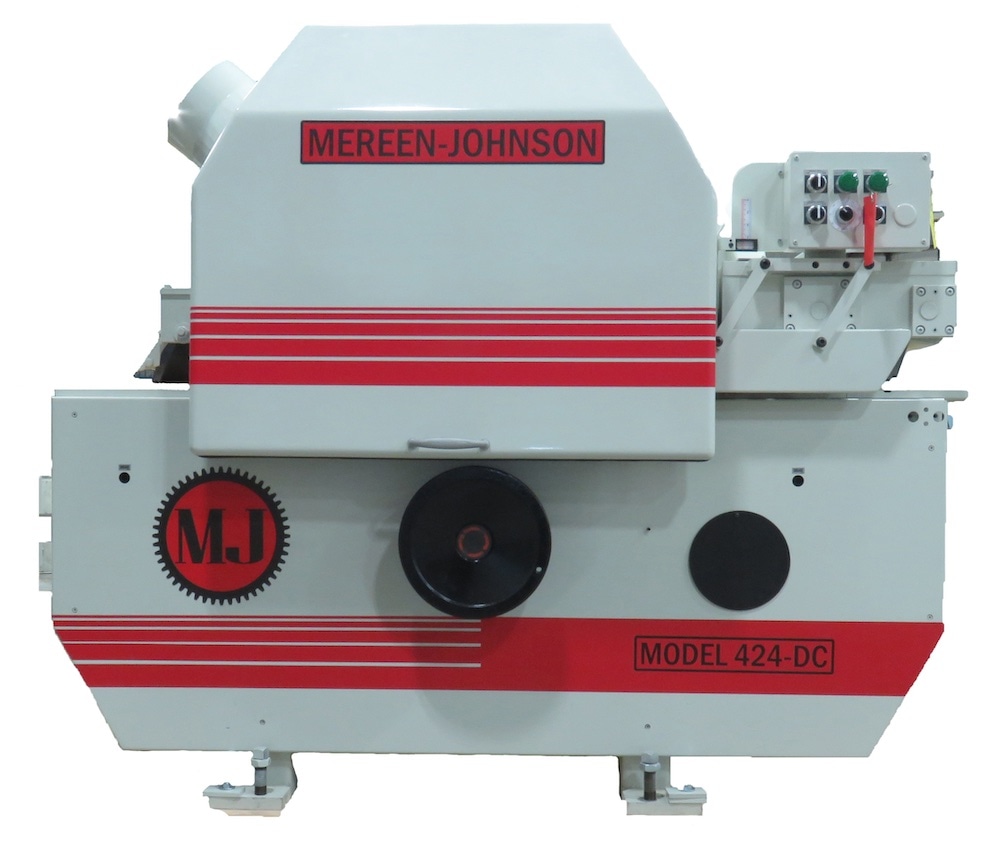
Mereen-Johnson Multiple Rip Saws offer straight line precision gang ripping with glue join…
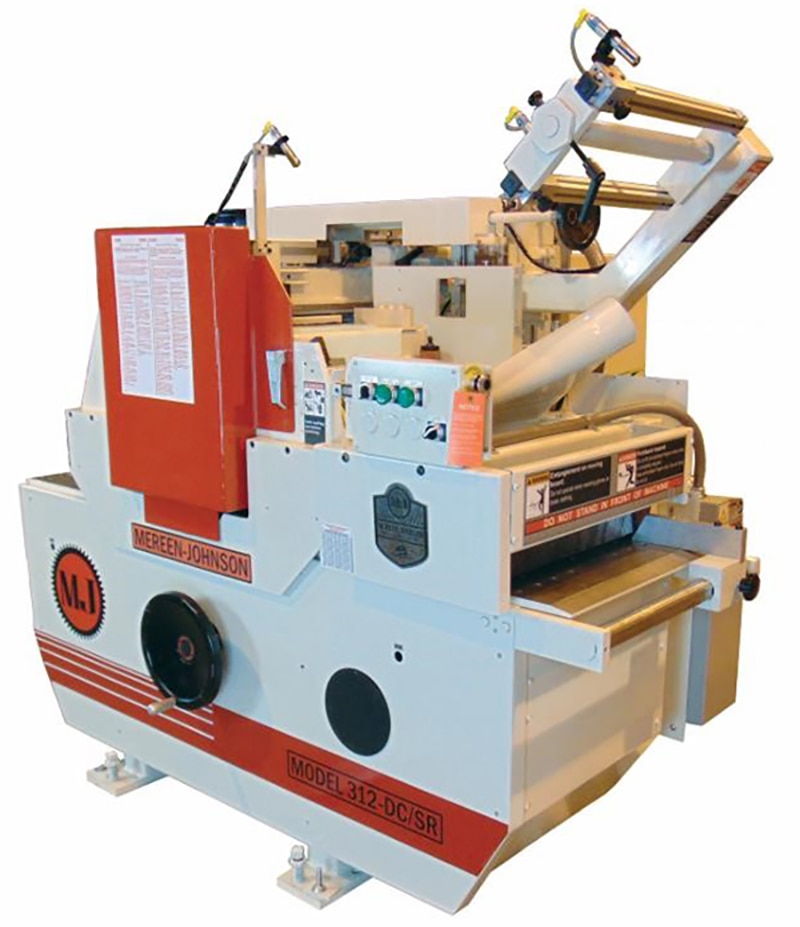
The Mereen-Johnson 300 Series rip saws offer all the quality, heavy-duty construction, and…
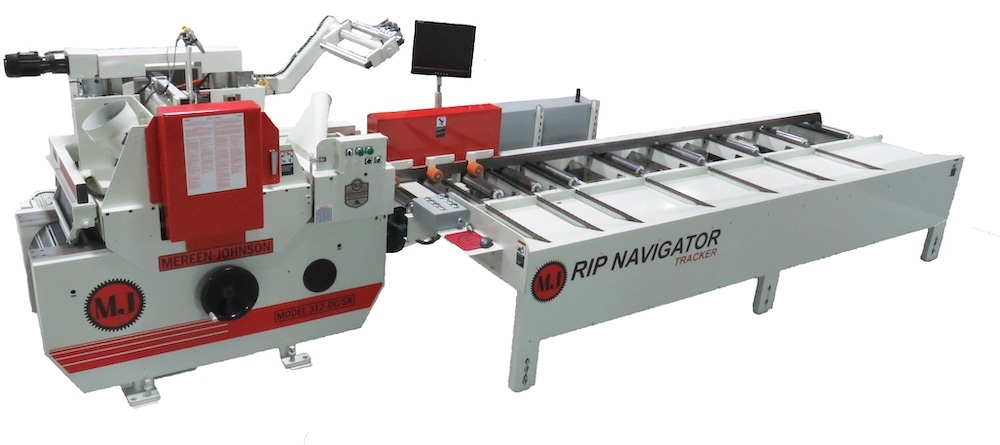
For big shop performance at a small shop price. 12″ arbor capacity with up to two inboard…
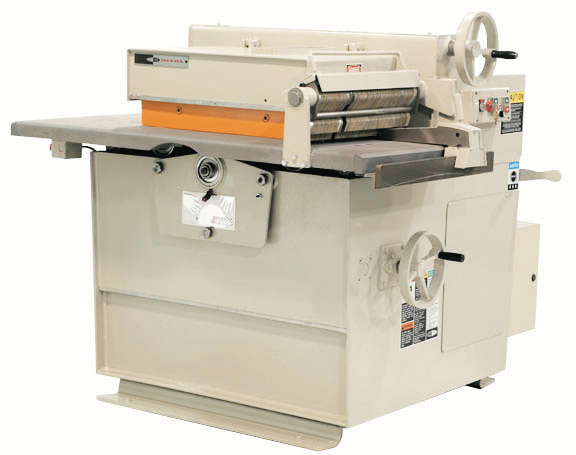
The Diehl Machines MR-90 is an undercutting roll feed gang rip saw. The roll feed design r…
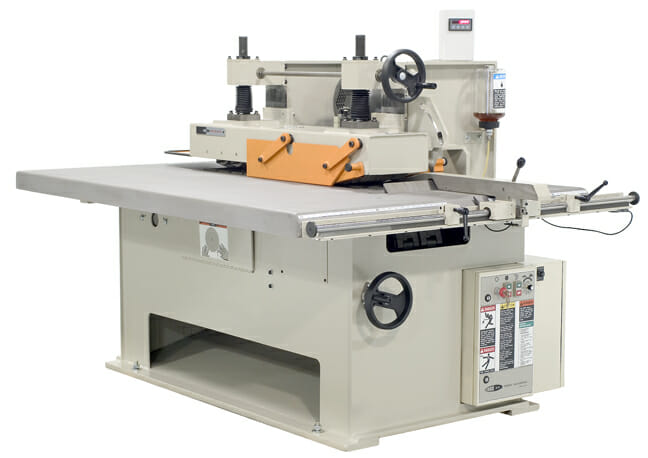
Diehl’s Full-Sized Rip Saw, a machine with the speed and performance to meet the most dema…
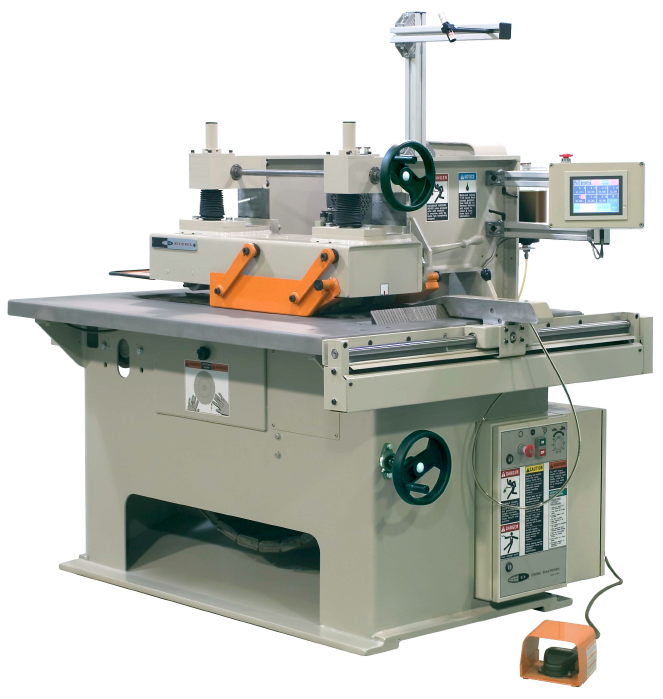
The Diehl Machines SL-35 is are our mid-sized Rip Saw, an economically priced machine with…
Automation & Robotics
Mereen-Johnson stands at the forefront of delivering cutting-edge automated handling solutions that will streamline your workforce and wood machinery assets. Our smart, automated handling solutions are meticulously crafted to enhance your machine throughput and efficacy while substantially trimming your labor expenses.
Our complete spectrum of services ranges from conceptualization and design of production lines to installation, personnel training and ongoing maintenance, and we cater to a wide array of client requirements, offering both standardized system solutions and fully personalized options to suit your specific needs.
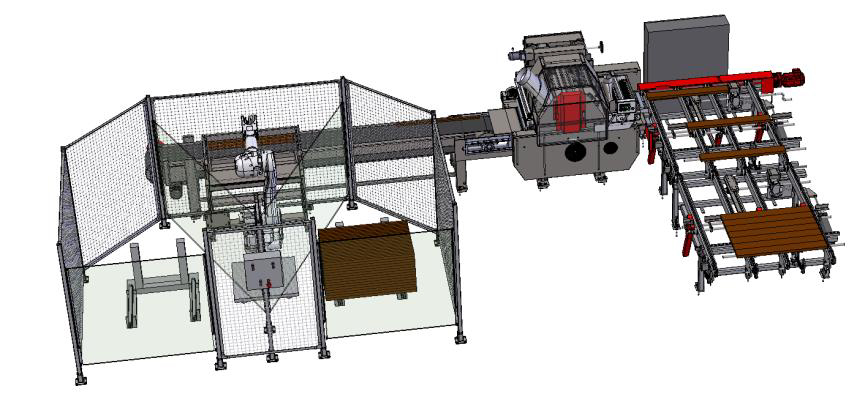
Every Mereen-Johnson custom woodworking machine begins in SolidWorks or AutoCAD — engineered to the specific component requirements, material dimensions, and throughput targets of the millwork operation it will serve. From that design, every part is fabricated, every sub-assembly is assembled, and every machine is tested at full production scale in Mereen-Johnson’s 150,000+ sq ft Webster, South Dakota facility before delivery.
This vertically integrated design-build capability is the defining differentiator for custom millwork customers. When you receive a Mereen-Johnson custom timber processing equipment system, it has already demonstrated its performance against your specifications — on the factory floor, before it reaches yours.
Custom millwork is where standard catalog custom woodworking machines reach the edge of their capability — and where Mereen-Johnson’s engineering-first positioning is most directly applicable. The pain points that drive millwork shops to a design-build partner are consistent across operations of every scale.
| Pain Point | Mereen-Johnson Solution |
| Production process too unique or complex for catalog custom woodworking machines | SolidWorks and AutoCAD design-build capability: every machine concept is engineered and manufactured in-house — the process drives the machine design, not the reverse |
| Custom woodworking equipment sourced from catalog vendors underperforms on unique component geometry | 150,000+ sq ft facility prototypes and tests full production-scale custom systems before delivery — operational performance is verified before the machine ships |
| High-value millwork lumber species making yield loss costly | Rip Navigator vision-scanning optimization maximizes yield from premium species board-by-board — the clearest ROI argument for custom timber processing equipment in high-cost material operations |
| Labor scarcity limiting throughput on custom millwork production cells | In-house robotic automation — machine tending, stacking, vision inspection — designed custom to the specific millwork workflow and component geometry |
| Complex architectural profiles requiring frequent tooling changes | CNC contouring on custom-configured tenoners executes complex profile paths without dedicated custom tooling for each specification; HSK tooling enables rapid changeover |
| Fragmented support across multiple machine vendors on a custom line | The same Mereen-Johnson engineering team that designed the custom woodworking machine provides remote and on-site support throughout its working life — one team, one accountability |
Mereen-Johnson’s custom engineering process is structured to eliminate the gap between machine specification and machine performance — the gap that catalog vendors fill with operator workarounds and field modifications after installation.
The process for every custom millwork engagement:
This end-to-end accountability — from the first engineering conversation through the machine’s full working life — is the structural difference between Mereen-Johnson’s custom woodworking machine offering and catalog vendors who retrofit standard machines to non-standard applications.
Labor scarcity is as acute in custom millwork as in any other wood manufacturing segment — and the irregular component geometries that define custom millwork make off-the-shelf robotic solutions particularly difficult to implement. Mereen-Johnson’s robotic automation systems are engineered in-house, from concept, around the specific part geometries and production workflows of each millwork operation.
Because Mereen-Johnson designs and builds its robotic systems using the same SolidWorks engineering process applied to its mechanical machinery, robotic cells and production machines are integrated at the design stage — not bolted together after the fact by a separate integration contractor.
Architectural millwork operations frequently specify premium lumber species — clear white oak, hard maple, cherry, walnut, and painted-grade pine — where raw material costs make yield loss a primary margin variable. Mereen-Johnson’s Rip Navigator vision-scanning optimization system applies the same board-by-board yield calculation that drives ROI in rough mill and flooring operations directly to custom timber processing equipment applications.
For custom millwork shops where lumber cost is the dominant variable cost, the Rip Navigator’s ability to maximize on-grade component yield from every board — regardless of width variation, taper, or edge defects — represents the clearest and most rapidly realized financial return in the custom woodworking equipment portfolio.
Contact the Mereen-Johnson engineering team to discuss your millwork component specifications, production volumes, material species, and automation objectives. If your process is too unique for a catalog, we will design and build the right custom woodworking equipment solution from the ground up.
Design-build means that Mereen-Johnson performs every stage of custom machine development in-house: application engineering, SolidWorks or AutoCAD 3D design, component fabrication, sub-assembly, final assembly, and full-scale pre-shipment testing. No stage is outsourced to a third party. The same engineering team that conducts the initial application review designs the machine, oversees fabrication, and provides post-installation support. This end-to-end accountability eliminates the coordination gaps and finger-pointing that occur when design, fabrication, and integration are distributed across separate vendors.
Every custom woodworking machine is assembled at full production scale in Mereen-Johnson’s 150,000+ sq ft Webster, South Dakota facility and run at production parameters before it ships. This means the machine’s performance against the agreed specification — feed speed, dimensional accuracy, throughput, cycle time, robotic integration — is verified on the factory floor, not discovered at the customer’s site during installation. If performance does not meet specification during factory testing, it is resolved in Webster before the machine is released for delivery. This pre-shipment verification is the single most important risk-reduction element in the custom equipment acquisition process.
Timeline varies with project complexity — a custom-configured standard machine may have a shorter schedule than a fully bespoke system with integrated robotics. The process includes an application engineering phase, design review, fabrication, assembly, and factory testing before shipment. Mereen-Johnson’s engineering team provides a project schedule at the conclusion of the application engineering phase, once the scope and configuration are defined. Contact us to discuss your timeline requirements and we will structure the project schedule accordingly.
Yes. Custom trim saw and sizing line configurations are among the most common custom woodworking equipment requests Mereen-Johnson receives from millwork operations. Unique feed angles, non-standard table dimensions, specialized hold-down geometry for irregular profiles, and integration with existing trim line conveying are all engineered from concept. The starting point is a detailed review of the specific component geometry, material, and cut specification — from that review, our engineers develop a machine design that executes the required operation precisely.
For millwork operations with high-variability component geometry — architectural trim shops, custom profile manufacturers, or run-to-order millwork facilities — Mereen-Johnson engineering incorporates programmable flexibility into the machine design rather than fixed-geometry tooling. CNC contouring, servo-driven positioning systems, and recipe-based parameter management allow the machine to accommodate geometric variability through software, not retooling. The specific degree of flexibility is engineered to match the variability range in the customer’s production requirements.
Mereen-Johnson’s design-build capability has no standard size limitation — machine table dimensions, feed system capacity, and tooling clearance geometry are all engineered to the component dimensions of the specific application. Large-dimension architectural millwork — heavy timber profiles, oversized door and window surrounds, structural decorative components — requires machine designs that catalog equipment simply does not offer. Mereen-Johnson’s in-house fabrication capability means that large-scale machine frames, feed systems, and support structures can be built to any required dimension.
The Mereen-Johnson and Diehl Machines dual-brand portfolio provides a broader range of proven, field-tested sub-systems as engineering building blocks for custom machine configurations. Where a standard Diehl straight-line rip system or a Mereen-Johnson gang rip arbor meets the custom application requirement, it is incorporated as a tested component — reducing the proportion of the machine that requires fully bespoke fabrication and shortening the engineering timeline. Fully custom fabrication is applied where standard sub-systems cannot meet the requirement. The result is custom machines built on proven foundations wherever possible.
Mereen-Johnson designs and builds custom robotic automation systems in-house for millwork production cells: machine tending, vision-guided part sorting and orientation, stacking with custom end-of-arm tooling for irregular millwork profile shapes, palletizing, and automated conveying between stations. Because the robotic system is engineered by the same team responsible for the production machinery, mechanical integration, control architecture, and timing are designed as a unified system — not coordinated between separate robotic integrator and machine builder contracts.
Mereen-Johnson provides lifetime support for all custom machines: spare parts sourced and stocked based on the specific machine design, complete schematics and documentation, remote monitoring via IoT connectivity, remote troubleshooting by engineers with direct design knowledge of the machine, and on-site service. Because the support team is the same team that designed the custom woodworking machine, there is no knowledge gap between the machine’s design intent and its field service — a critical advantage on machines with non-standard geometry or unique automation integration.
The process begins with a direct conversation with Mereen-Johnson’s engineering team about your production requirements: the component geometry you need to process, the material species and dimensions, your throughput targets, your facility layout constraints, and any specific quality or automation requirements. From that conversation, our engineers develop a preliminary specification and project scope. There is no requirement to have a fully defined specification before the first conversation — in fact, the application engineering dialogue is often where the most important specification decisions are made. Contact us to begin.