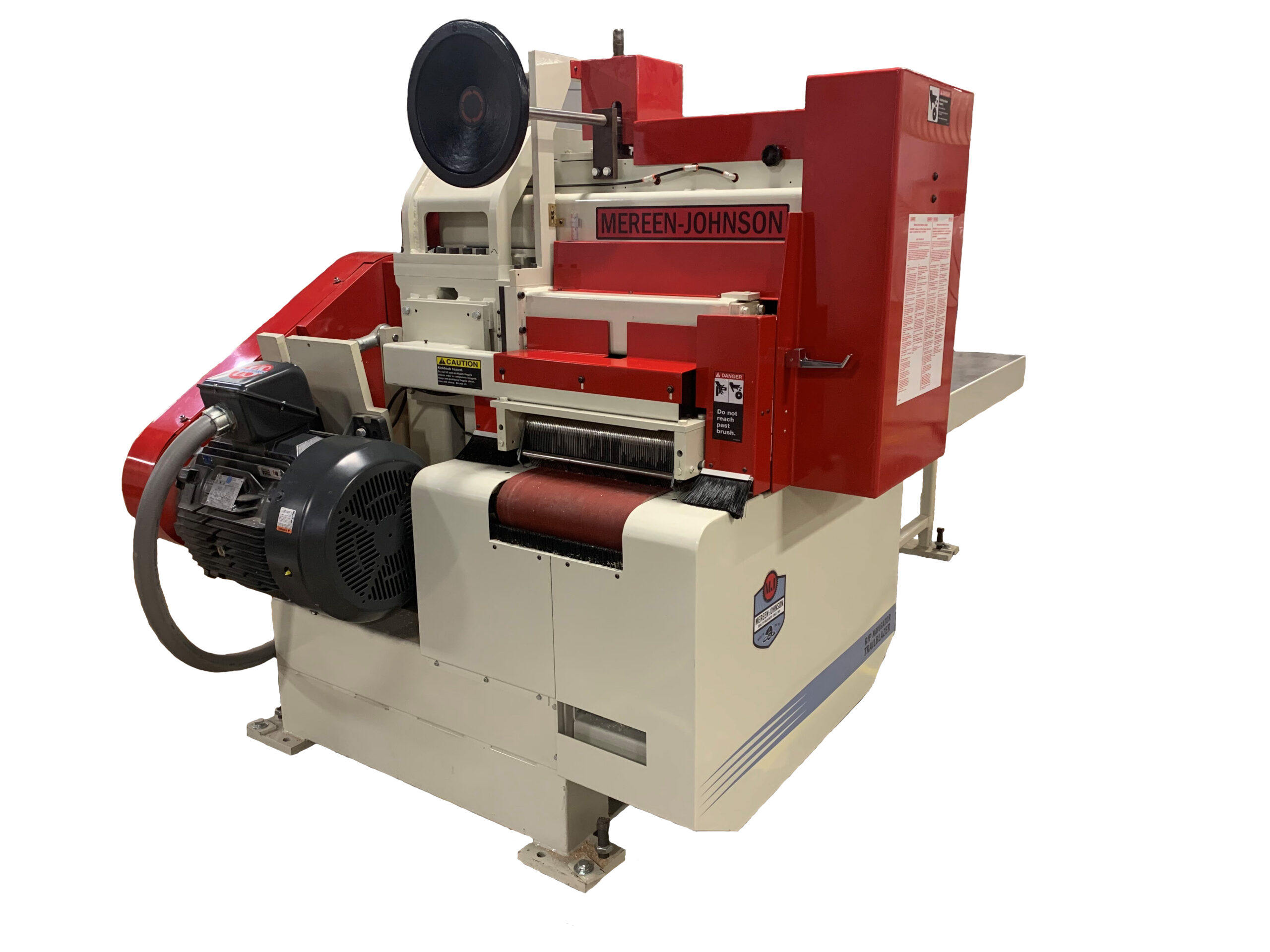
Model 5300 “Select-A-Rip”™ Rip Saw with Rip Navigator™ Trailblazer
Model 5300 “Select-A-Rip”™ Rip Sawwith Rip Navigator™ Trailblazer The 5300 with Trailblaze…
Cabinet manufacturers operate in one of the most demanding production environments in the wood industry: high SKU variability, tight dimensional tolerances, mixed substrate requirements, and persistent labor scarcity — all at once. Stock, semi-custom, and custom cabinet shops each face these pressures differently, but none escapes them.
Mereen-Johnson is committed to empowering cabinet makers with tailored cabinetry manufacturing equipment designed to streamline production processes and enhance product quality. Our cabinet shop equipment spans panel sizing, CNC joinery, precision ripping, yield optimization, and robotic automation — all engineered and manufactured in the USA, and all configurable to your specific production cell requirements.
Machines
The Mereen-Johnson cabinet shop equipment lineup addresses every processing stage in cabinet box, door, and face frame production. All machines handle the full range of cabinetry substrates — solid wood, plywood, MDF, laminate, particleboard, and hardboard.
Model 5300 “Select-A-Rip”™ Rip Sawwith Rip Navigator™ Trailblazer The 5300 with Trailblaze…
The Model 110 Equalizer can be integrated with most moulders, creating a highly efficient…
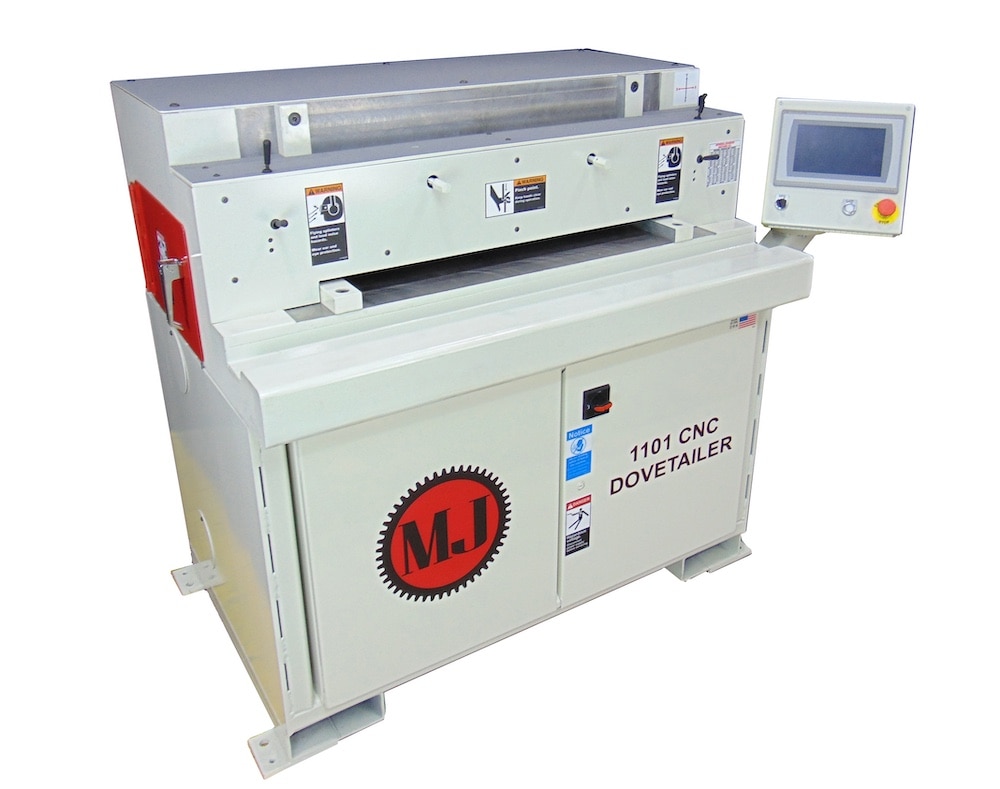
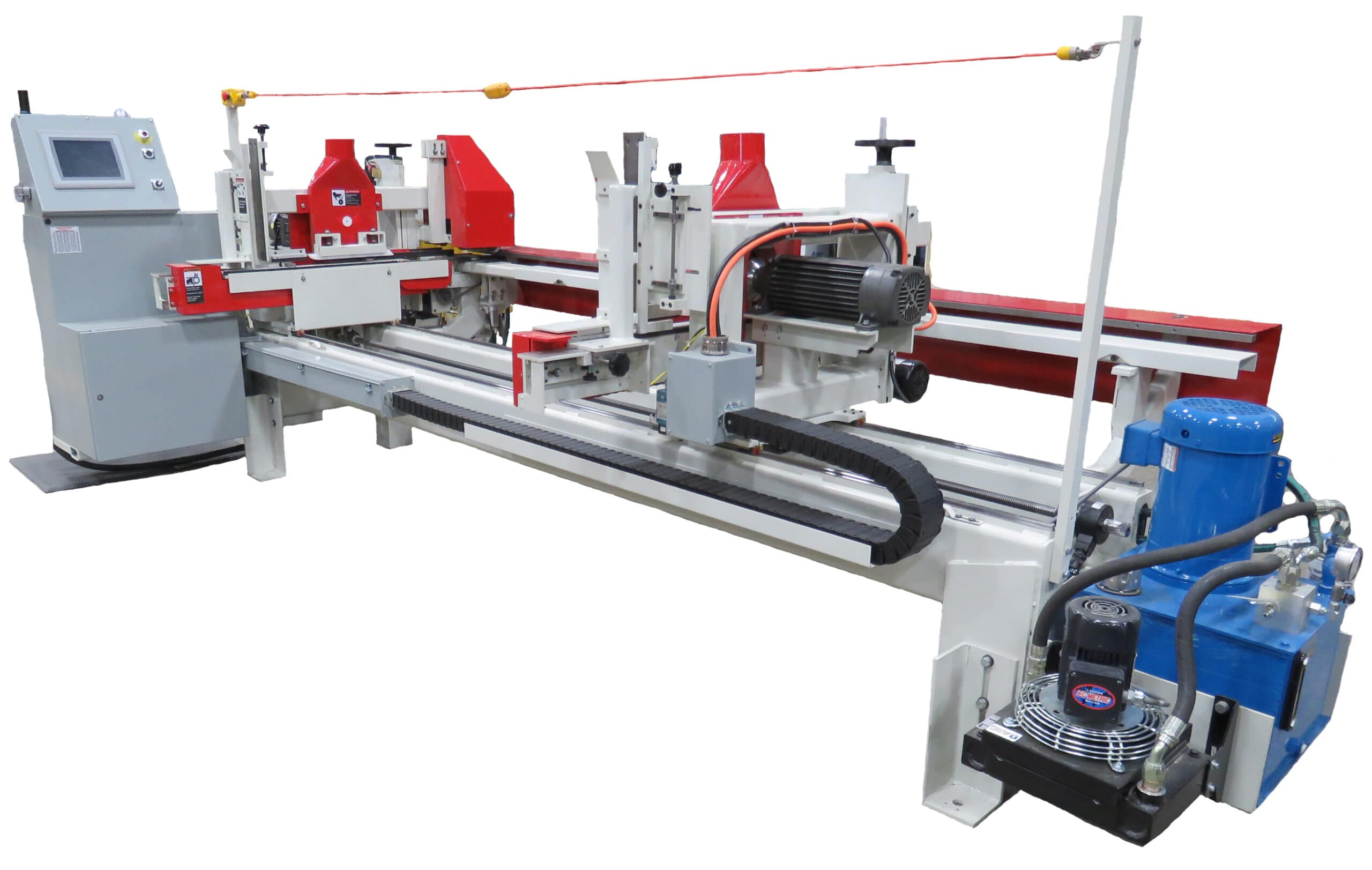
Mereen-Johnson’s CNC Dovetailers offer the quality construction, precision, reliability, a…
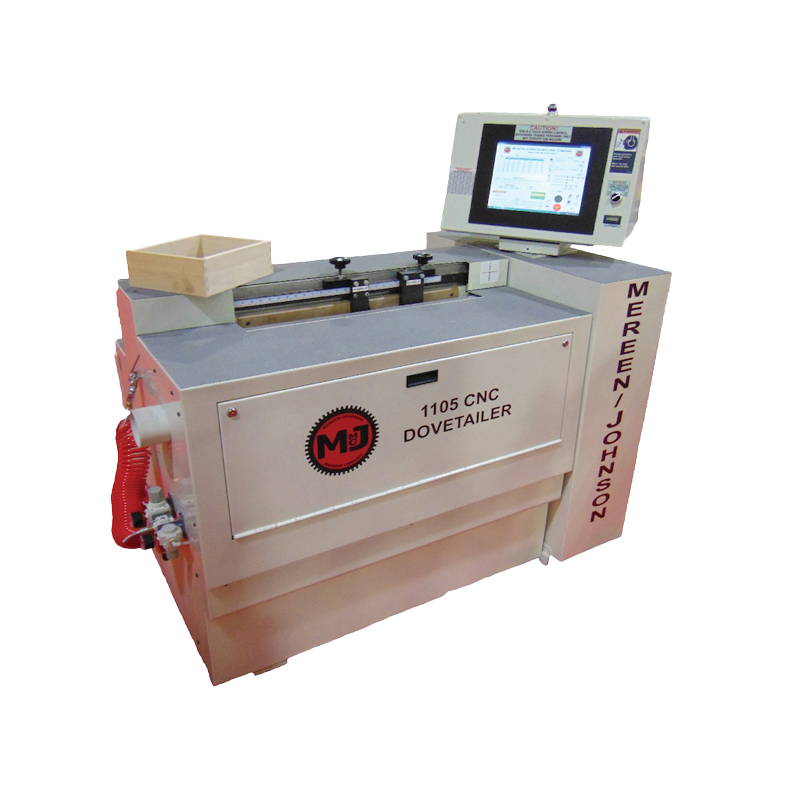
Perfect For High Production Operations, this machine is designed for high-production opera…
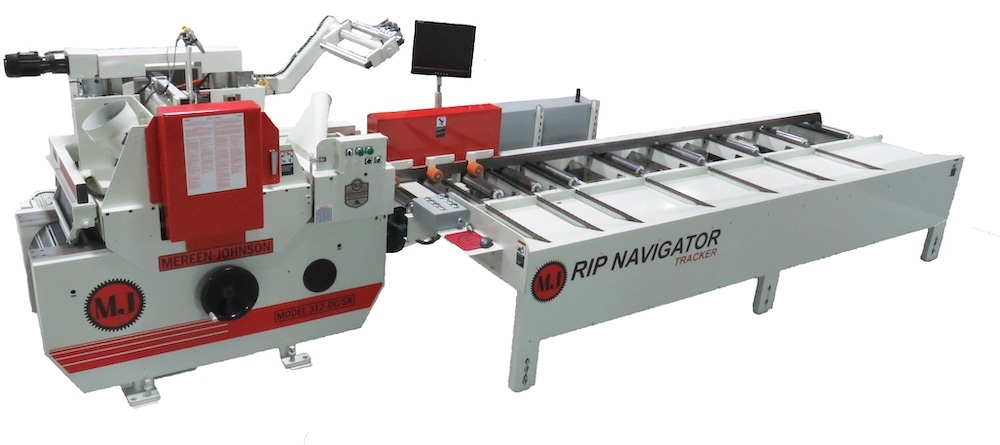
For big shop performance at a small shop price. 12″ arbor capacity with up to two inboard…
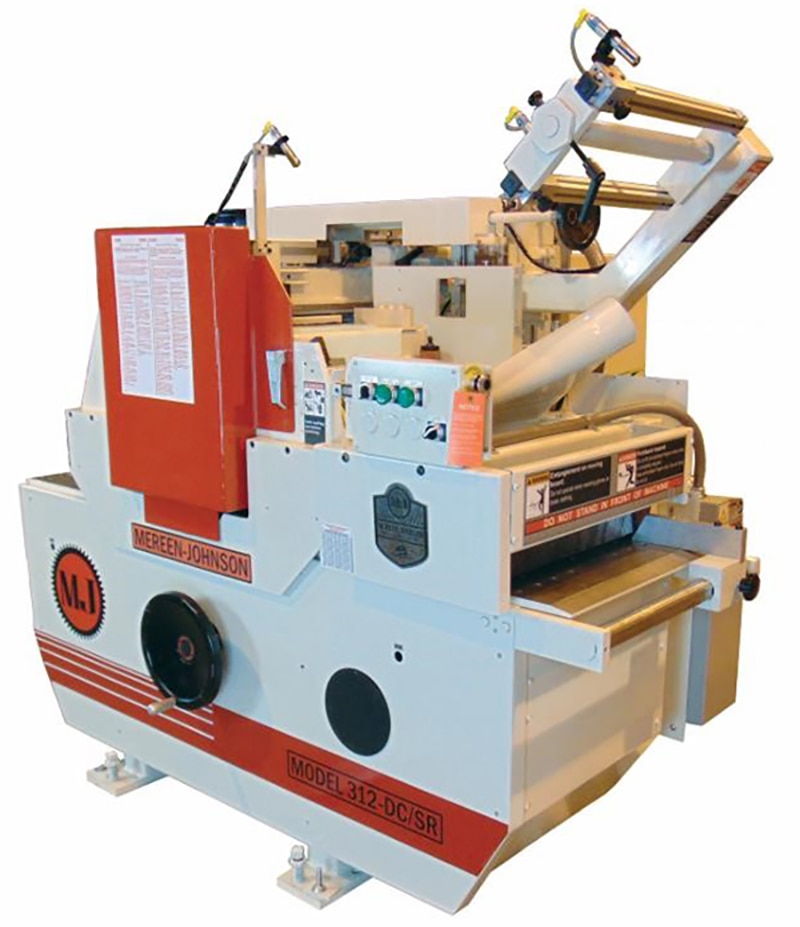
The Mereen-Johnson 300 Series rip saws offer all the quality, heavy-duty construction, and…
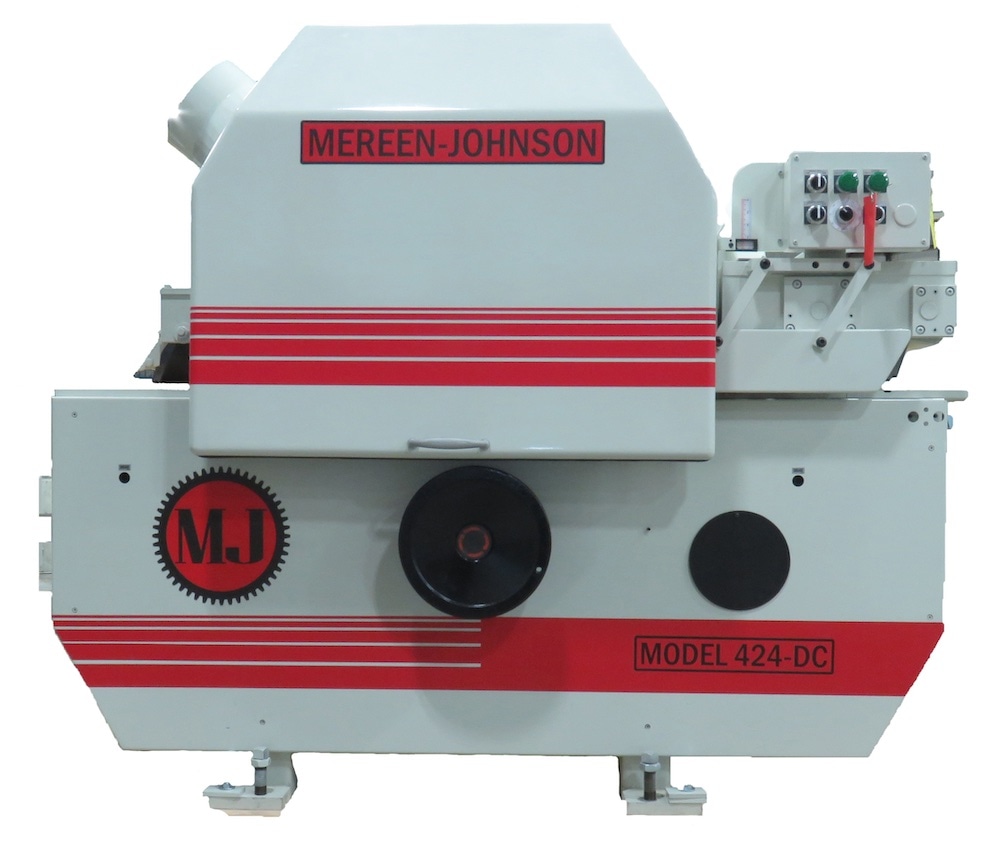
Mereen-Johnson Multiple Rip Saws offer straight line precision gang ripping with glue join…
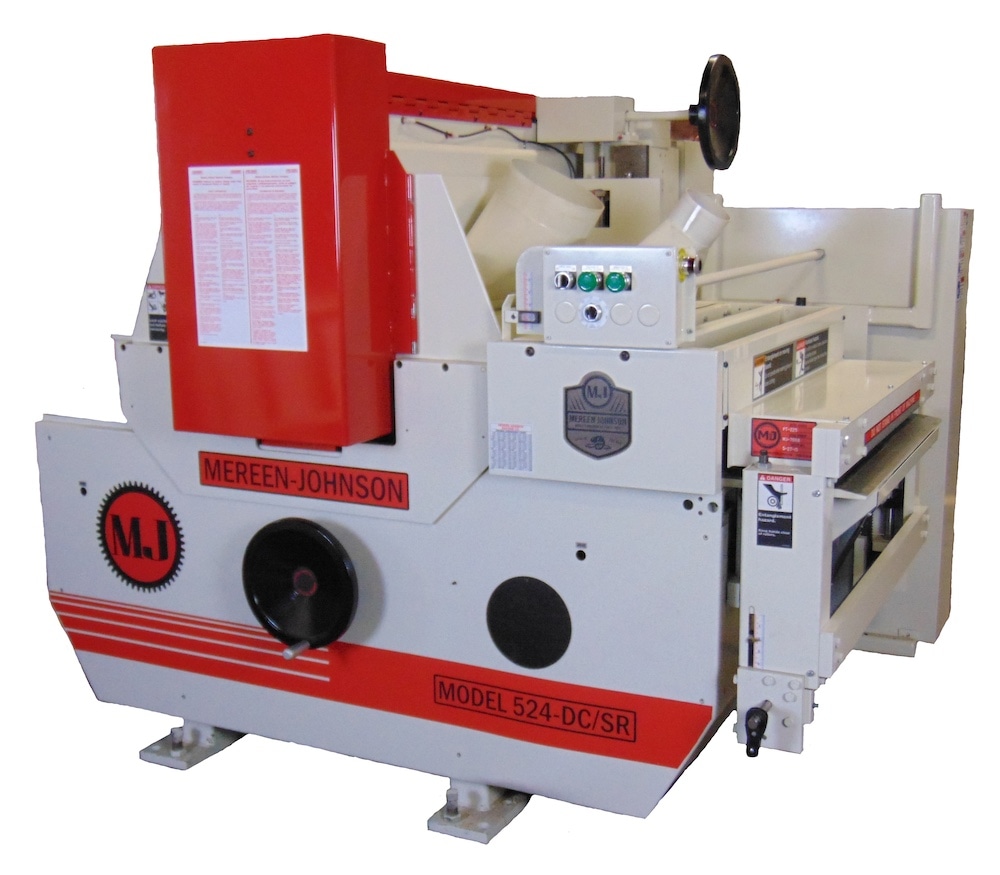
With up to four moving saw blades, Select-Ripping has never been more affordable. Our 500…
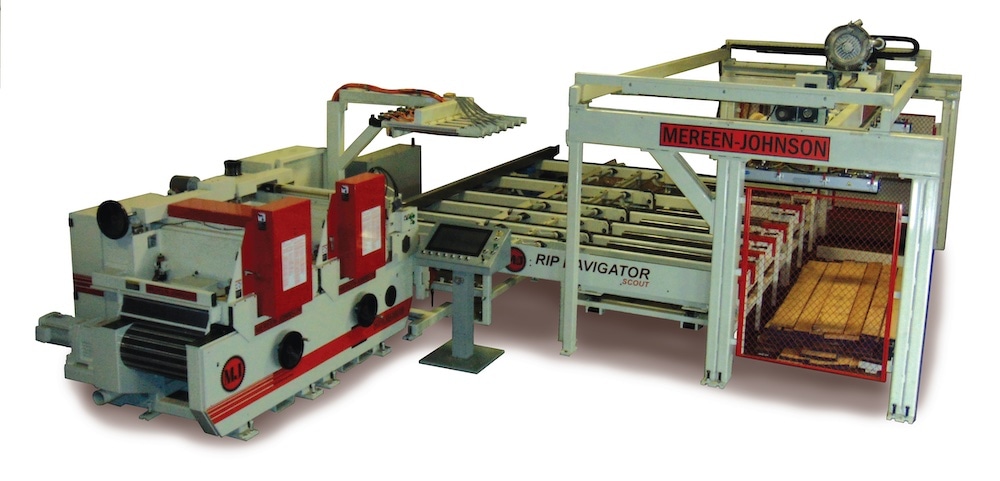
Mereen-Johnson manufacturers a complete line of gang rip saw infeed systems from manual to…
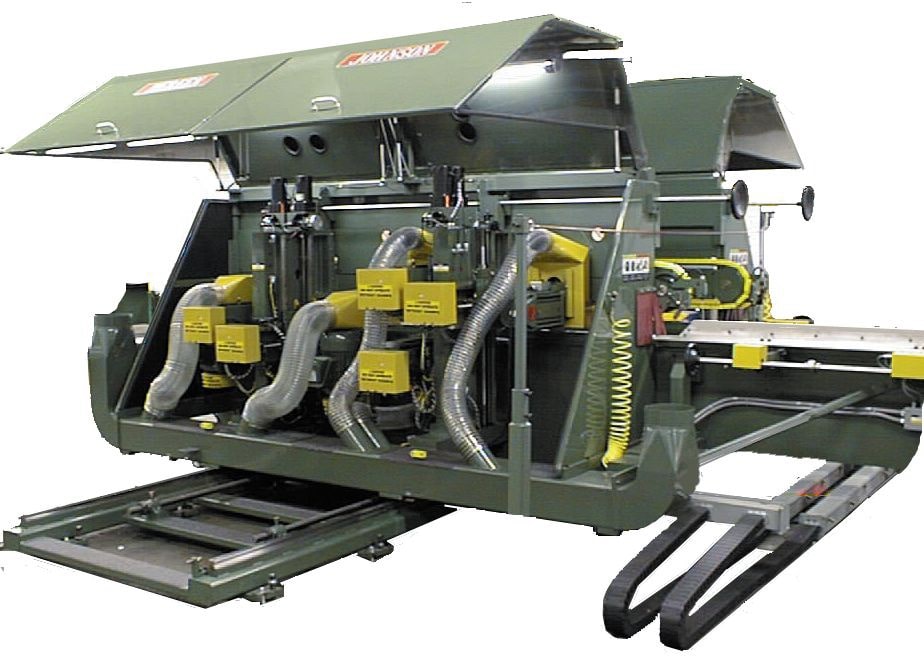
Feature the latest in technology advancements, ensuring improved consistency, accuracy, su…
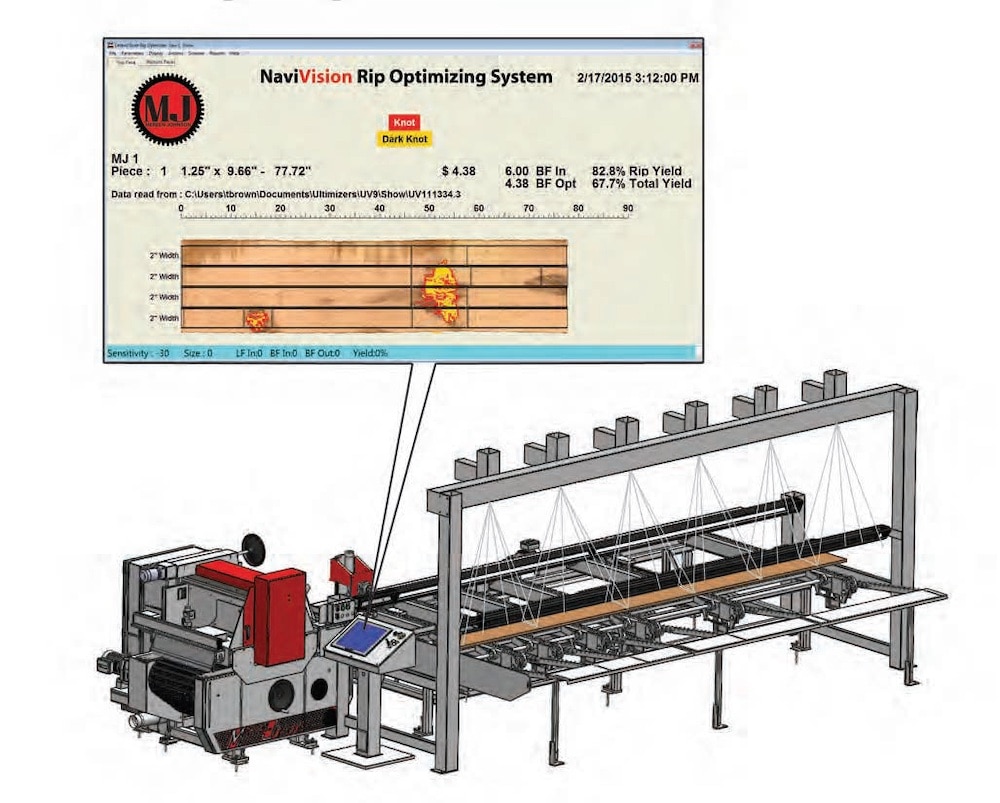
Now with NaviVision scanning, Mereen-Johnson provides multiple color cameras for single fa…
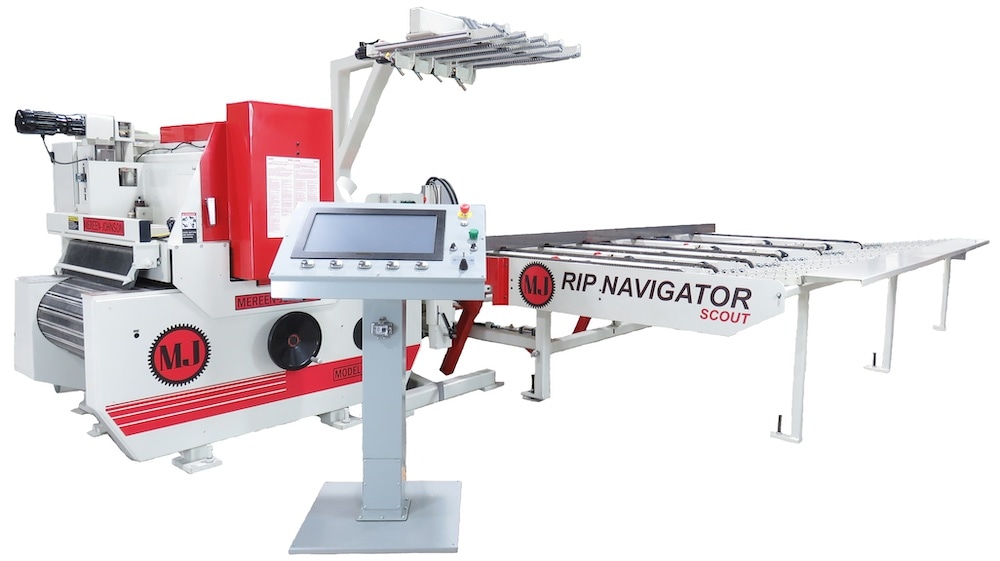
Our largest Rip Optimization system is the Scout; Equipped with infeed chains, board deale…
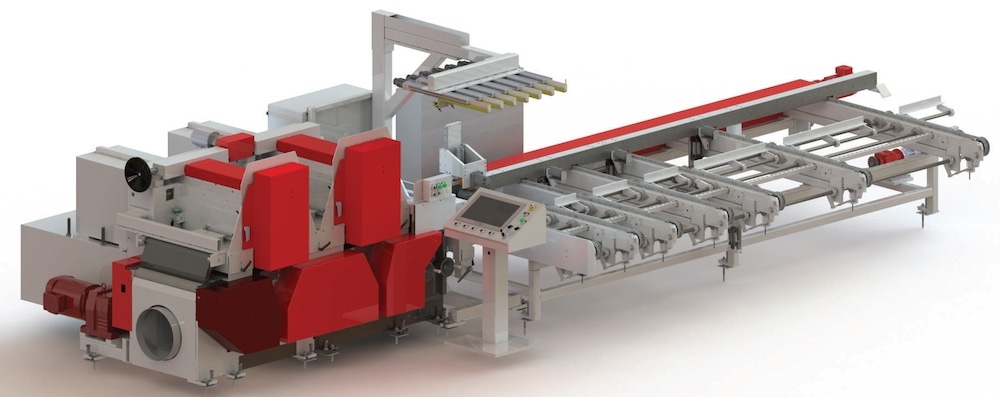
Our Roll Feed Saw’s high-speed, high-yield hogging arbor options virtually eliminates edgi…
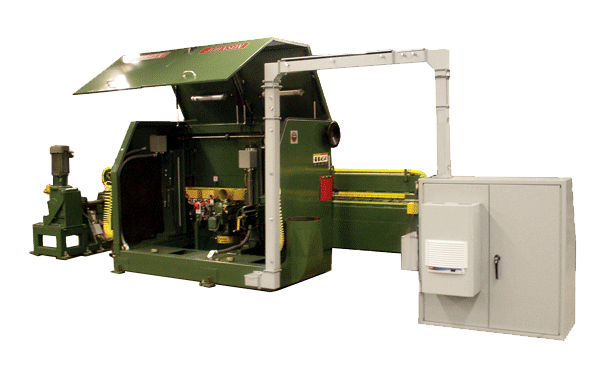
Our Tenoners are designed for high production runs while simultaneously providing the flex…
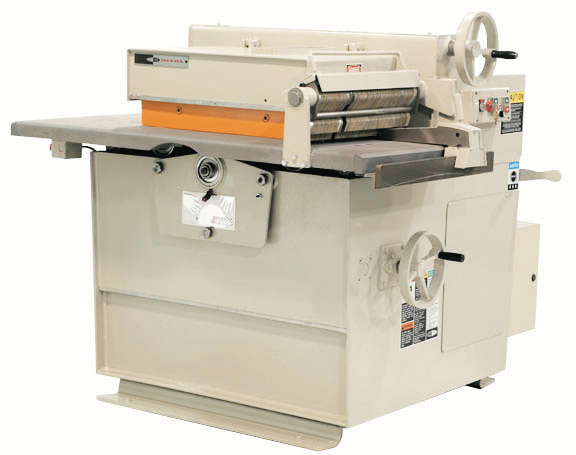
The Diehl Machines MR-90 is an undercutting roll feed gang rip saw. The roll feed design r…
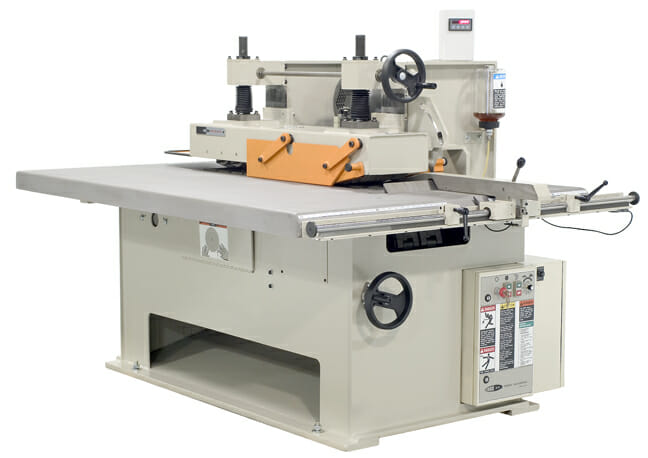
Diehl’s Full-Sized Rip Saw, a machine with the speed and performance to meet the most dema…
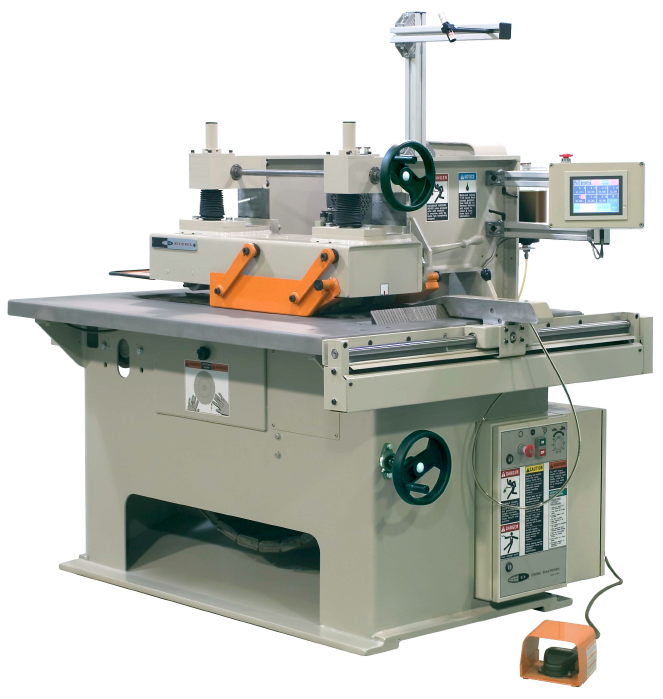
The Diehl Machines SL-35 is are our mid-sized Rip Saw, an economically priced machine with…
Automation & Robotics
Mereen-Johnson stands at the forefront of delivering cutting-edge automated handling solutions that will streamline your workforce and wood machinery assets. Our smart, automated handling solutions are meticulously crafted to enhance your machine throughput and efficacy while substantially trimming your labor expenses.
Our complete spectrum of services ranges from conceptualization and design of production lines to installation, personnel training and ongoing maintenance, and we cater to a wide array of client requirements, offering both standardized system solutions and fully personalized options to suit your specific needs.
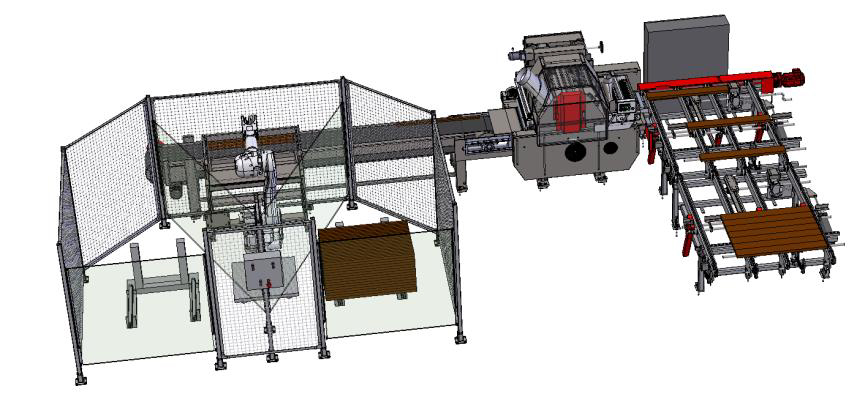
Mereen-Johnson’s cabinetry manufacturing equipment covers the complete production sequence: panel rough-sizing, face frame ripping and yield optimization, CNC drawer box joinery, cabinet door frame profiling, and robotic material handling. Every machine is available in standard configuration or custom-engineered to your layout, throughput targets, and substrate mix.
The result is a single engineering partner accountable for every station in your cabinet production line — from the first rip cut on a panel to the last robotic stack at the end of the cell.
SKU variability and labor scarcity are the defining operational constraints for cabinet manufacturers today. Mereen-Johnson’s cabinet door machinery and production equipment addresses both — and the yield, quality, and vendor consolidation challenges that compound them.
| Pain Point | Mereen-Johnson Solution |
| High SKU variability across custom and semi-custom orders | Recipe-driven CNC joinery and panel sizing — switch between cabinet configurations in seconds from the operator console without retooling |
| Labor scarcity on repetitive panel handling tasks | In-house designed robotic feeding, stacking, and destacking cells reduce headcount requirements on high-volume cabinet production lines |
| Hardwood waste eroding face-frame cabinet margins | Rip optimizing systems with vision scanning maximize yield on expensive hardwood species — the primary cost driver in face-frame cabinetry |
| Inconsistent panel sizing across mixed substrate types | 435 Panel Saw handles solid wood, ply, MDF, laminate, and particleboard — consistent square, defect-free sizing across every cabinet substrate |
| Cabinet door quality: tearout on visible joinery faces | 1105-H dual cutting path virtually eliminates tearout on cabinet door and drawer faces — the most visible quality signal in finished cabinetry |
| Multiple vendor relationships for box, door, and frame machinery | End-to-end cabinet making machines capability from one supplier: panel sizing through joinery, profiling, and robotic handling |
Cabinet door production demands its own set of precision requirements: consistent frame profiling, accurate panel raising, and defect-free joinery on the faces most visible to the end customer. Mereen-Johnson’s cabinet door making machine solutions address each of these requirements with purpose-built engineering.
For cabinet shops running high door volumes with frequent style changes, the combination of the Single End Tenoner and CNC Dovetailer — both sourced from Mereen-Johnson — creates an integrated cabinet door machine workflow with unified parts support and a single service relationship.
Face-frame cabinetry is where lumber yield most directly determines shop profitability. Hardwood species — maple, cherry, oak, walnut — carry material costs that make every edging and off-cut a measurable margin loss. Mereen-Johnson’s rip optimizing systems address this directly.
For cabinet shops where hardwood face frame stock represents a significant proportion of material cost, rip optimization system ROI is typically among the fastest of any cabinet shop equipment investment.
Labor availability is a structural constraint for cabinet manufacturers — not a cyclical one. Mereen-Johnson’s robotic automation solutions are engineered in-house and integrated directly into cabinet production cells, addressing the repetitive panel handling tasks that consume the most operator time and present the highest labor cost exposure.
Because Mereen-Johnson designs and builds its robotic systems in-house — using the same engineering team responsible for the production machinery — integration is native, not retrofitted. The robotic cell and the cabinet manufacturing equipment it serves are engineered as a single system.
Contact the Mereen-Johnson engineering team to discuss your cabinet box, door, and face frame production requirements. We will specify the right cabinet manufacturing equipment configuration — standard or custom — for your operation and substrate mix.
The 435 Panel Saw is designed to size the full range of cabinetry substrates in a single machine platform: solid wood, hardwood plywood, MDF, particleboard, laminate-faced sheet goods, and hardboard. Feed speed and blade configuration are set to match the specific substrate being processed. For cabinet shops running mixed substrate production — solid wood face frames alongside MDF door cores and plywood box panels — the 435 eliminates the need for separate sizing machines for each material type.
In semi-custom and custom cabinetry production, drawer box dimensions, joint specifications, and door profiles change frequently across individual orders. Mereen-Johnson’s CNC dovetailers store saved recipes for every joint and dimension specification in the shop’s catalog. Operators switch between specifications by selecting the saved recipe at the touchscreen — joint parameters, clamping positions, and cutting geometry are all recalled automatically in seconds. This eliminates the manual mechanical setup that cam-based dovetailers require for every dimension change, directly reducing changeover time between custom cabinet orders.
Face-frame cabinetry uses hardwood lumber — typically maple, oak, cherry, or paint-grade poplar — for stiles and rails, making lumber yield the primary variable cost driver. A vision-scanning rip optimization system calculates the maximum-yield rip solution for each incoming board against the active stile and rail cut list, recovering usable width that a fixed-arbor rip saw would leave in edgings. For shops running significant volumes of hardwood face frame stock, the yield improvement from optimization typically delivers the clearest and fastest financial return of any cabinet shop equipment investment.
Yes. Mereen-Johnson’s robotic automation systems are engineered in-house, from concept, around the specific component geometries and production workflows of each cabinet operation. End-of-arm tooling, vision guidance parameters, and conveying geometry are all designed custom — not adapted from off-the-shelf robotic systems that assume standard part formats. For cabinet shops with non-standard panel sizes, mixed thickness stacks, or variable component orientation, custom robotic engineering is the only approach that reliably delivers the required handling performance.
The Single End Tenoner is available with fixture tables up to 72 inches in length, accommodating full-size cabinet door frames and larger panel configurations. Servo-driven alignment pins maintain dimensional registration across the full table length, ensuring consistent profiling geometry on large door frames that shorter fixture tables cannot reliably hold. Variable-speed sanding heads deliver in-line surface finishing without secondary sanding operations on the door frame profile.
Stock cabinet operations prioritize throughput and minimal changeover — fixed configurations run at high volume with infrequent SKU changes. Semi-custom operations require fast recipe-based changeover across a defined SKU catalog. Custom cabinet shops need maximum flexibility: rapid dimension changes, mixed substrate capability, and machinery that accommodates one-off specifications without full retooling. Mereen-Johnson’s cabinet shop equipment serves all three segments — standard configurations for stock production, recipe-driven CNC joinery for semi-custom, and custom-engineered machinery for operations with unique production requirements.
Mereen-Johnson’s engineering team conducts a detailed application review of the existing line — feed speeds, conveying geometry, control architecture, and facility layout — before specifying new equipment. Integration interfaces, including infeed and outfeed conveying, control handshakes with existing PLC systems, and physical footprint constraints, are engineered into the machine design. We do not deliver machines that assume standard integration — every installation is engineered to the specific facility.
The Mereen-Johnson portfolio includes equipment appropriate for operations of all scales. The 1101 single-spindle CNC dovetailer was specifically developed to bring large-shop CNC joinery capability to smaller furniture and cabinet shops at an accessible price point. The 435 Panel Saw, single end tenoner, and select-rip saws are all scalable to shop production volumes. Mereen-Johnson’s engineering team will specify the configuration appropriate for your current volume and designed to accommodate future growth.
Mereen-Johnson cabinet manufacturing equipment is IoT-enabled across the product line. Plant managers and operators can access real-time machine status, production metrics, and performance data from any connected device. Cut list management, recipe updates, and settings adjustments can be made remotely without stopping the line. For multi-shift or multi-location cabinet operations, this remote visibility provides production oversight without requiring physical presence at each machine.